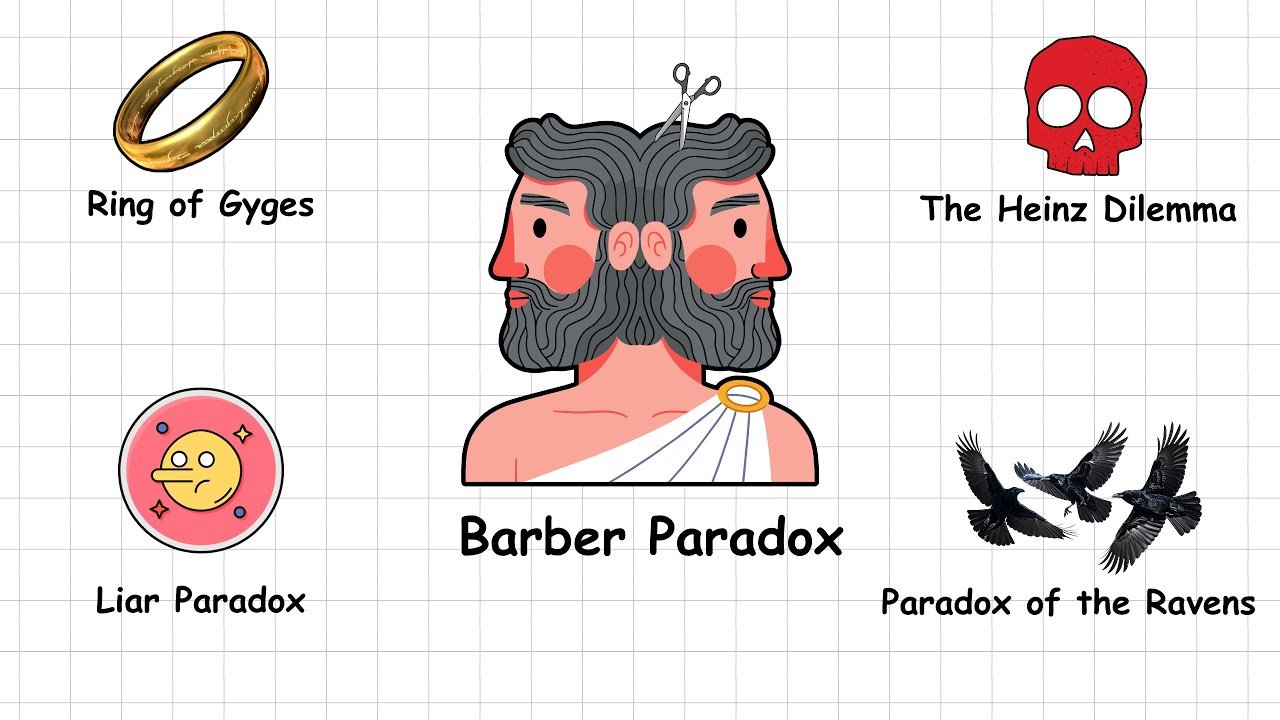
The Ring of Gyges by Plato
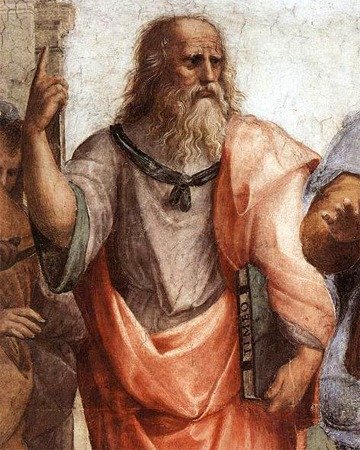
The Ring of Gyges is a thought experiment from Plato’s book, The Republic, written in 380 BC. This story tackles what happens to morality when power takes over. The story revolves around a shepherd named Gyges in the kingdom of Lydia. One day, after an earthquake opens up the earth near him, he discovers a mysterious cave. Curious, he goes inside and finds a dead giant wearing a golden ring. Without hesitation, Gyges takes the ring.
And it’s not just an ordinary ring. It’s a ring that can make Gyges turn invisible at will. At first, Gyges uses the ring for personal gain. Then he thought to himself, I can do basically anything I want without people noticing. Soon, he uses it to steal the queen, remove the king, and take the throne for himself. Plato asks us to consider, would anyone act morally if they had the power to do anything without facing consequences, without anyone seeing.
The story suggests that power when in unchecked by any accountability corrupts people. Gyges’ transformation from a humble shepherd to a ruthless ruler is an example of how even someone who might initially seem moral could become immoral when given the opportunity to act with impunity. Plato through the voice of the character Glaucon argues that most people behave morally not because they want to but because they have to. Society rewards good behavior and punishes bad behavior. If you took away those consequences like with the ring of Gyges, many people might abandon their morals and do whatever benefits them most. It raises the question of whether morality is universal or whether it is only maintained through societal pressures and the fear of being caught. Imagine for a second that it had been you who found the ring of power.
If no one were watching, would you still choose to do what is right?
The Hines dilemma
The Hines dilemma is a moral paradox proposed by psychologist Lawrence Colberg in the 1950s and is arguably the most simple yet most debated paradox of all time. A man named Hines is trapped in a serious predicament. His wife is very sick and there’s only one medicine that could save her. But the doctor who has the medicine is asking twice the price and Hines could not afford it. After trying all the ways to raise money for his wife’s medication, he could only raise half the money. Now he questions himself. Should he steal the medication to save his wife’s life? It’s still one of the most common dilemmas in the modern world today. Coberg surveyed people around him. From all the responses he receives, Coberg developed a six-stage theory of moral development.
Stage one, individuals make decisions based on obedience and the fear of punishment.
Stage two, reasoning shifts to self-interest and reciprocity, such as arguing Hines should steal the medicine because he needs his wife and she might return the favor someday.
Stage three, individuals consider interpersonal relationships, suggesting that a good husband would naturally want to save his wife.
Stage four, law and order, where the reasoning is that stealing is wrong simply because it breaks the law.
In stage five, individuals recognize that while laws are important, they’re not absolute and sometimes protecting human life can justify breaking the rules.
Stage six, the highest level is based on universal ethical principles such as justice and human dignity with reasoning like a human life is more valuable than property right. Coberg believed that moral reasoning $\frac{matures}{time}$ becoming increasingly independent of external rules.
The paradox of the ravens
The paradox of the ravens also known as Hemple’s paradox is a logical paradox proposed by
German philosopher Carl Gustav Hemple in the 1940s. It deals with how we confirm scientific theories through observation and it shows how logical reasoning can lead to seemingly absurd conclusions. Let’s start with a simple statement. All ravens are black. This seems like a straightforward claim that we could test by observing ravens. Every time we see a black raven, it provides evidence that supports our hypothesis. The more black ravens we observe, the more confident we become that all ravens are indeed black.
In formal logic, the statement all ravens are black is logically equivalent to its contraositive, which is all non-black things are non-raven. These two statements mean exactly the same thing. If one is true, the other must also be true. So, if observing a black raven confirms that all ravens are black, then observing a non-black non-raven should equally confirm the same hypothesis. This means that observing a green apple, a white shoe, or a red car should provide evidence that all ravens are black, since these are all non-black things that are also non- ravens.
But this seems completely absurd. How could one looking at a green apple in your kitchen tell you anything about ravens? Yet the logic appears to be sound. This creates our paradox. The logical reasoning seems valid, but the conclusion feels ridiculous. Hel himself acknowledged that this counterintuitive result and the paradox has puzzled philosophers and logicians ever since. There have been several proposed solutions to this paradox. One approach involved basian probability. According to this view, observing a green apple does technically provide evidence that all ravens are black. But the amount of evidence is so incredibly tiny that it’s essentially worthless. This is because there are vastly more non-black non-raven objects in the universe than there are ravens. So while a green apple does confirm the hypothesis in a technical sense, it does so by an infinitesimally small amount. Another solution suggests that the paradox arises from ignoring background knowledge.
When we observe a raven, we’re specifically looking at the class of ravens. But when we observe a green apple, we’re not learning anything new about ravens at all because we already knew apples aren’t ravens. Some philosophers argue that the paradox shows the importance of selective sampling. Observing ravens is relevant because we’re specifically testing the property of ravens. Observing random non-black objects isn’t helpful because we’re not systematically sampling from any meaningful population.
The liar paradox
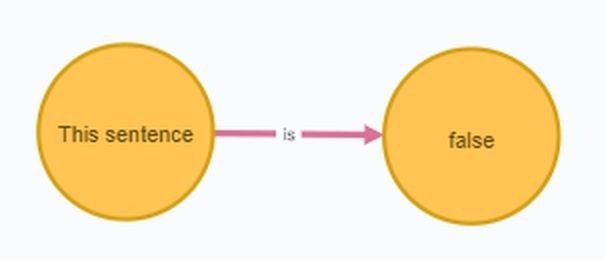
The liar paradox is one of the oldest and most well-known paradoxes in philosophy and logic. It revolves around the simple statement this statement is false. Let’s say you ask your friend to tell you one truth and he simply said this statement is false. If that’s the truth then what it says must be the case that the statement is false. But if the statement is false then it must be true because it says that it is false. This creates a logical loop where the statement cannot consistently be either true or false.
The liar paradox was famously discussed by the ancient Greek philosopher Epimenides who declared all cretins are liars. But there’s just one thing he himself is a If Epimenides a himself is telling the truth then he is lying creating a paradox. The paradox has implications in set theory where paradoxes arise when sets are defined in terms of themselves. It also ties into Gödel’s incompleteness theorems which show that in any sufficiently powerful logical system they are truths that cannot be proven within the system.
In modern logic and mathematics, this paradox is often addressed through non-classical logics that allow for contradictions to coexist or by recognizing that some statements are undefined or paradoxical by nature.
The Barber paradox
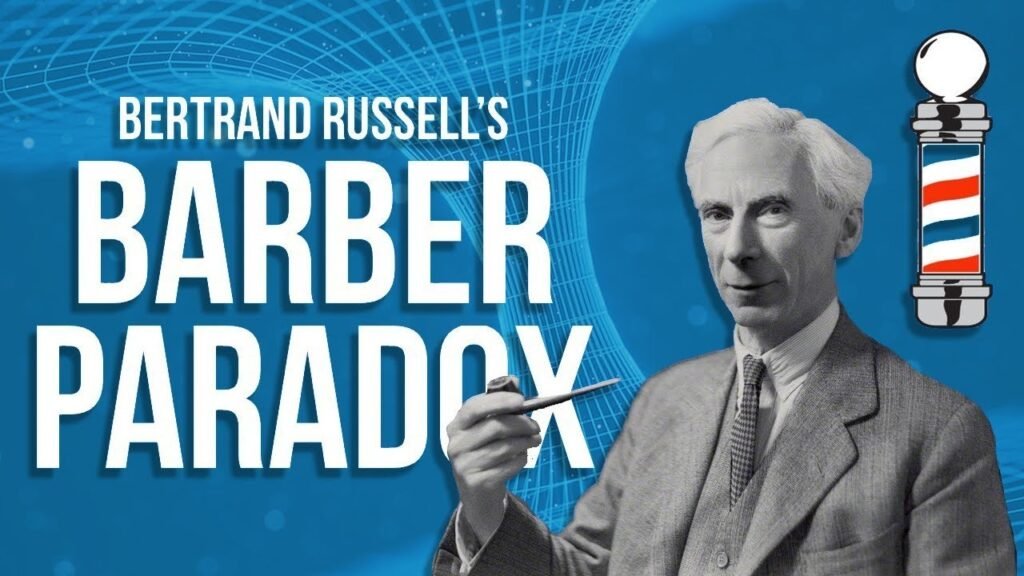
image credit Youtube @ConcerningReality
The barber’s paradox is a self-referential paradox proposed by British mathematician and philosopher Bertrand Russell in 1901. It’s one of the most famous logical paradoxes and it goes like this. Imagine a small town with exactly one barber who is a man. The barber has a very specific role.
He shaves all and only those men in town who do not shave themselves. In other words, if a man shaves himself, the barber doesn’t shave him. But if a man doesn’t shave himself, then the barber does shave him. Now, does the barber shave himself? Let’s think through both possibilities. If the barber shaves himself, then $according^{rule}$, he only shaves men who don’t shave themselves. So, he couldn’t be shaving himself. But if the barber doesn’t shave himself, then accordingly, he must shave all men who don’t shave themselves, which means he should be shaving himself.
No matter which option we choose, we end up with a contradiction. This is what makes it a paradox. Russell actually created this paradox as a simplified version of a more complex problem he discovered called Russell’s paradox which dealt with set theory in mathematics.
At the time, mathematicians were trying to build a rigorous foundation for all of mathematics using sets. But Russell showed that naive set theory led to contradictions. Specifically, he asked whether the set of all sets that do not contain themselves contains itself. The barber’s paradox was created to make this abstract concept more accessible to non-mathematicians.
The resolution to this paradox is that the initial setup is actually impossible. The barber as described simply cannot exist in reality. The rules create a logical impossibility. This is similar to asking what happens when an unstoppable force meets an immovable object. The question itself contains contradictory assumptions.
In formal logic, we say that the set described in the paradox is not well defined. Russell’s discovery of this type of paradox had profound implications for mathematics. It showed that mathematicians needed to be more careful about how they defined sets and led development of more rigorous axiomatic set theories that avoided these self-referential contradictions. The Barber’s paradox is still used today to teach students about the limits of naive logical systems and the importance of careful mathematical definitions.
Currently, no commonly agreed upon solution to paradoxes of of self-reference exists. They continue to pose foundational problems and semantics and set theory. No claim has been made to a solid foundation for these subjects until a satisfactory solution has been provided. Problems surface when it comes to formalizing semantics, which is the concept of truth and to set theory. If formalizing the intuitive naive understanding of these subjects, inconsistent systems linger as the paradoxes will be formalizable in these systems.
Timestamps:
Full paradox playlist:
https://www.youtube.com/playlist?list=PLH_mBfN0OrJ8_2CnTT7tZd5yI22q2SJdF
Timestamps:
0:00 The Ring of Gyges (Plato)
1:44 The Heinz Dilemma (Lawrence Kohlberg)
3:24 The Paradox of the Ravens (Carl Hempel)
5:50 The Liar Paradox (Epimenides.)
This article was generated from the video transcript of “Every Logic Paradox Created by Mathematicians Explained”.
Watch the full video above for visual explanations and diagrams.
Leave a Reply