Category: Geometry
-
Why You Can’t Draw These 4 Shapes Exactly
With only an unmarked straightedge and a compass, ancient geometers could bisect angles, build equilateral triangles and draw regular pentagons. Yet four simple-sounding tasks resisted every attempt for millennia. The reason turned out to be algebraic: once constructions are translated into equations, it becomes clear why squaring the circle, doubling the cube, trisecting an angle… read more
Written by

-
Every Perfect 4D Shape Explained
The tesseract is the best-known four-dimensional shape, yet it is only one of six perfectly regular convex shapes in four dimensions. Each is built from identical three-dimensional solids, called cells, fitted together with complete symmetry. This article walks through all six: the 120-cell, 600-cell, 5-cell, tesseract, 16-cell and 24-cell, and shows how they relate through… read more
Written by

-
Every Shape That Can Roll Without Being Round Explained
A wheel does not have to be a circle. Some strange shapes can roll smoothly between two parallel surfaces, and others can roll across a plane along winding paths. This article tours the Reuleaux triangle, the Meissner bodies, the sphericon, and the oloid. Along the way it uses Gaussian curvature to explain why some surfaces… read more
Written by

-
Every Weird Shape That Shouldn’t Exist Explained
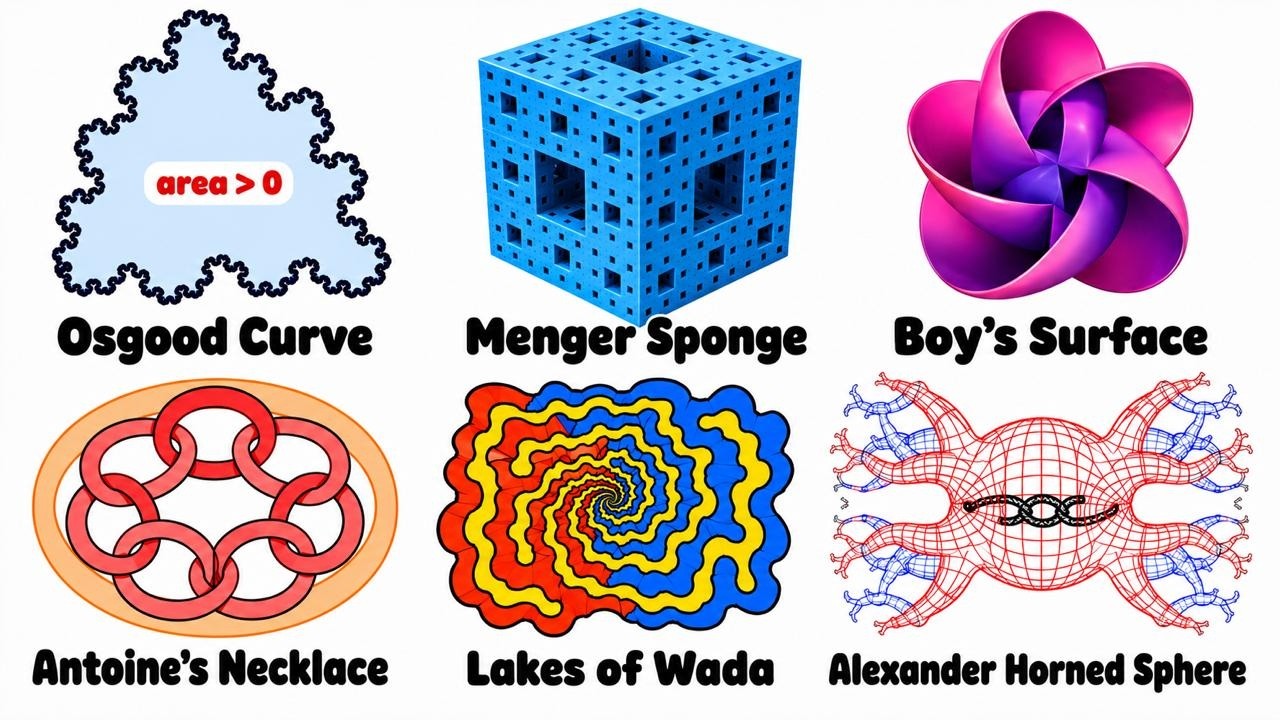
Some mathematical objects seem to break the rules of geometry. A curve that has area, a sponge with no volume but endless surface, a one-sided surface that fits in space, and a cloud of dust that can snag a rope: each is rigorously defined and fully consistent. This article tours six of them and explains… read more
Written by
-
Every Proof of the Pythagorean Theorem Explained
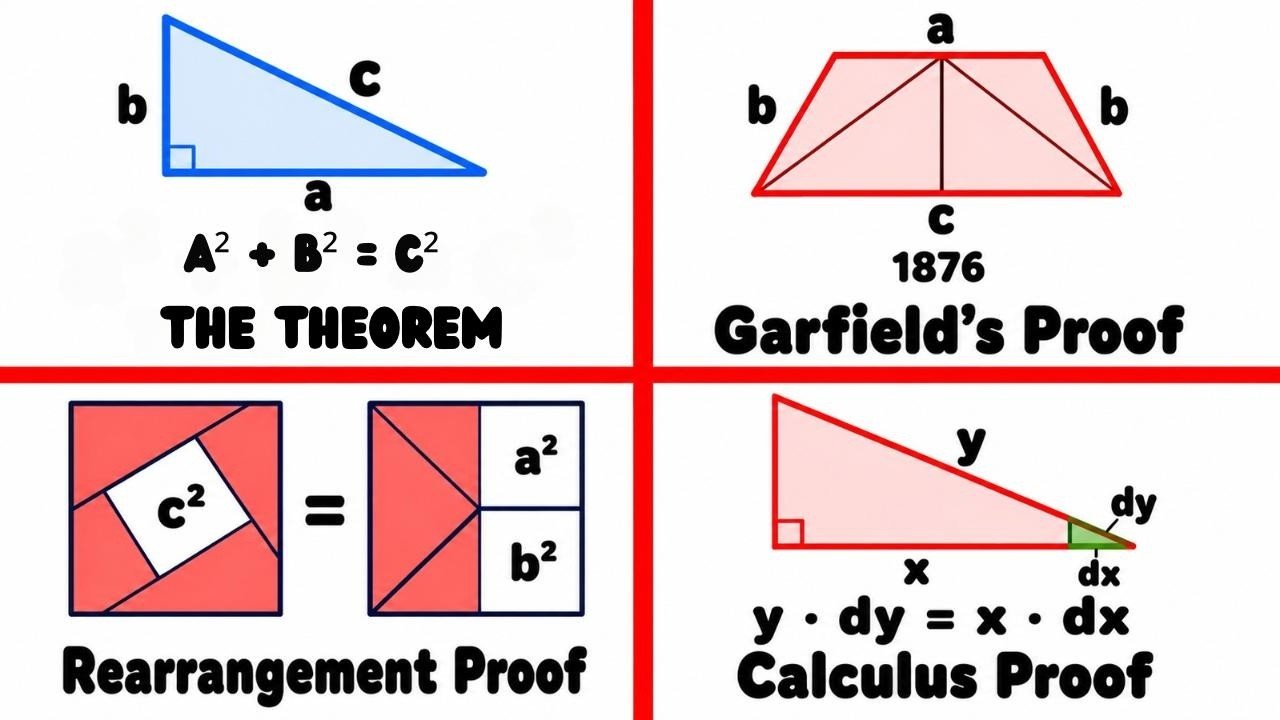
The Pythagorean theorem is one of the oldest and most famous results in mathematics. More than 370 proofs of the theorem are known, and mathematicians have continued finding new ones for over 2,000 years. Some proofs use nothing more than geometry and rearrangement. Others use algebra, trapezoids, or even calculus. In this article, we will… read more
Written by
-
Math Has Exactly 5 Perfect Shapes
Take a three-dimensional shape in which every face is the same regular polygon, such as an equilateral triangle, square, or regular pentagon, and the same number of faces meet at every corner. A shape this perfectly symmetrical is called a Platonic solid, named after the ancient Greek philosopher Plato. Only five Platonic solids exist: Tetrahedron… read more
Written by

-
Every Unsolved Geometry Problem that Sounds Easy – Part 2
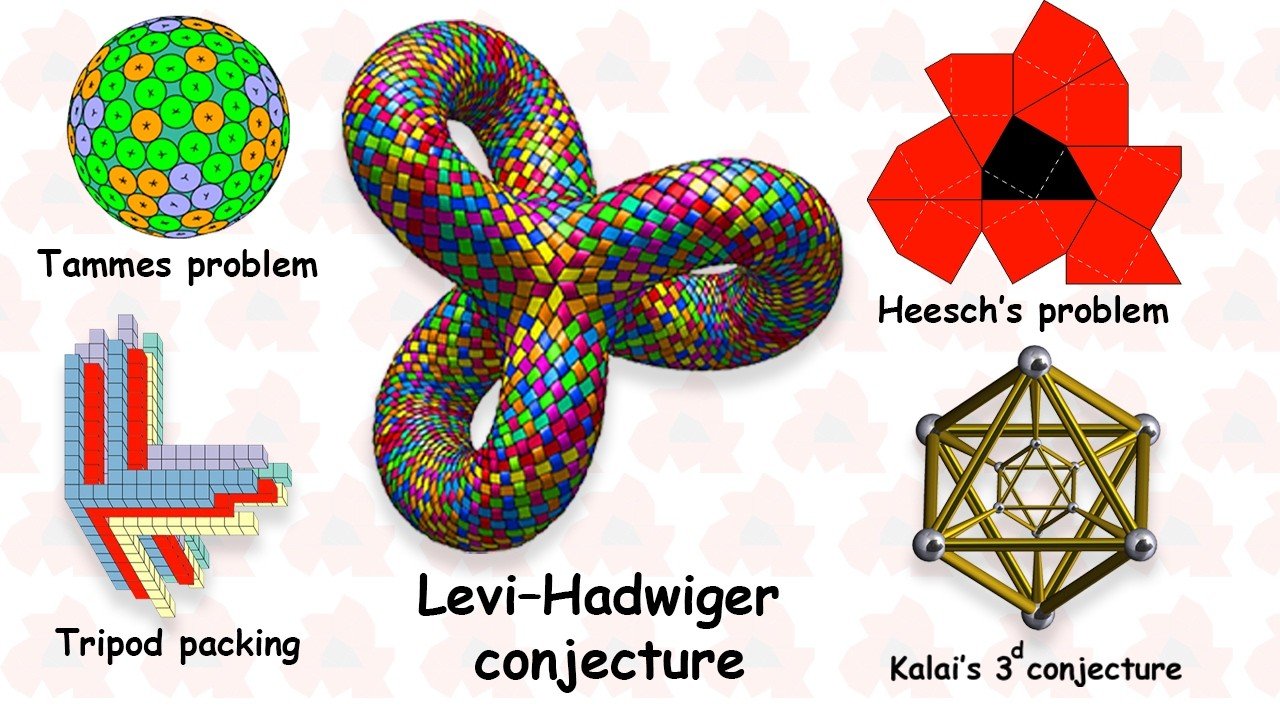
Five More Geometry Problems That Are Way Harder Than They Look Tripod Packing The Thomson Problem The Levi-Hadwiger Conjecture Heesch’s Problem Kalai’s 3ᵈ Conjecture Tripod Packing Let’s start with a cube existing at some fixed location in 3D space. (This problem can be easier to comprehend if you think of the cubes as Minecraft blocks,… read more
Written by
-
Every Complex Geometry Shape Explained 2
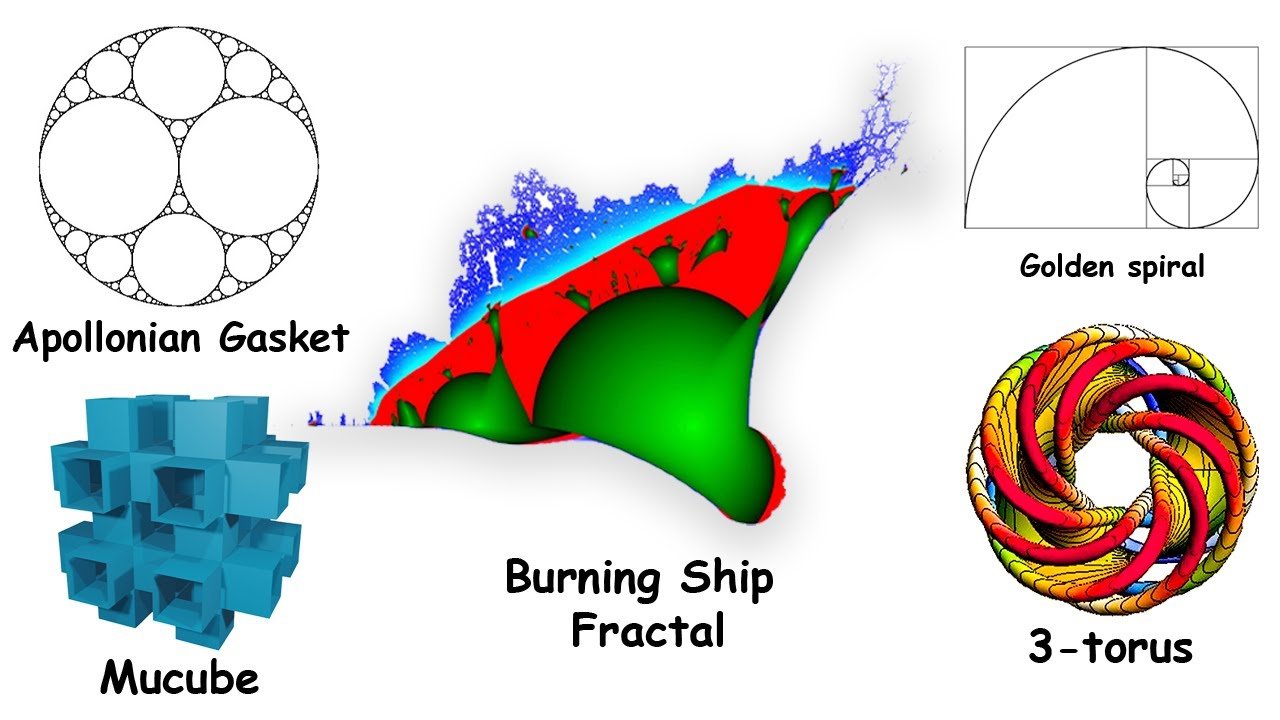
The Apollonian Gasket The Golden Spiral The Three-Torus The Mucube The Burning Ship Fractal The Apollonian Gasket Let’s start by drawing a circle named C₁. Note that we’re not including the inside region as part of the circle; that region is called a disc in math terms. Now draw a second circle, C₂, that touches… read more
Written by
-
Every Angle Unit Explained in 10 minutes
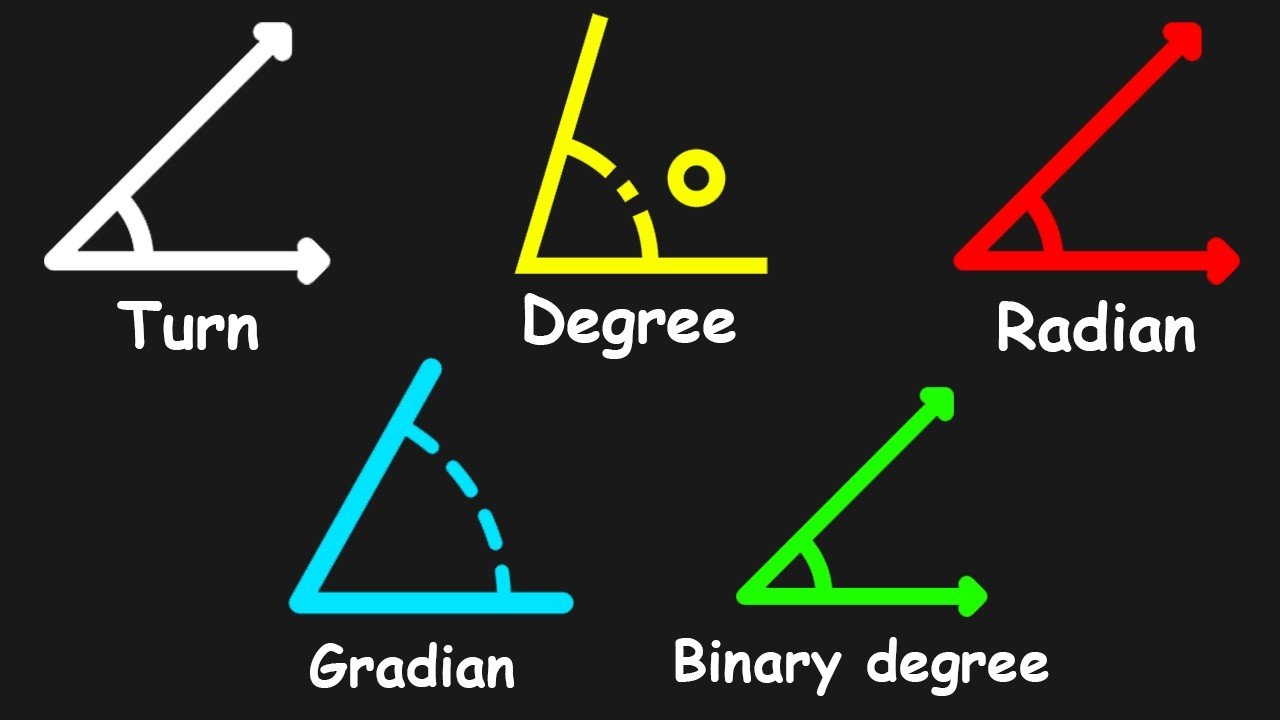
The Turn The Degree The Radian The Gradian Binary Angular Measurement The Turn An angle is formed between two rays that share an endpoint. The rays are called the angle’s sides, and the endpoint is called the angle’s vertex. Various units of measurement can be used to measure an angle. The turn is the simplest… read more
Written by
-
Every Algebraic Curve Explained
Linear Functions Quadratic Functions Polynomials of Degree n Rational Functions Radical Functions Exponential Functions Logarithmic Functions Trigonometric Functions Inverse Trigonometric Functions Hyperbolic Functions The Absolute Value Function Constant Functions Floor and Ceiling Functions The Sign Function Piecewise Functions Linear Functions Linear functions have the form f(x) = mx + b. Here m represents the slope… read more
Written by