
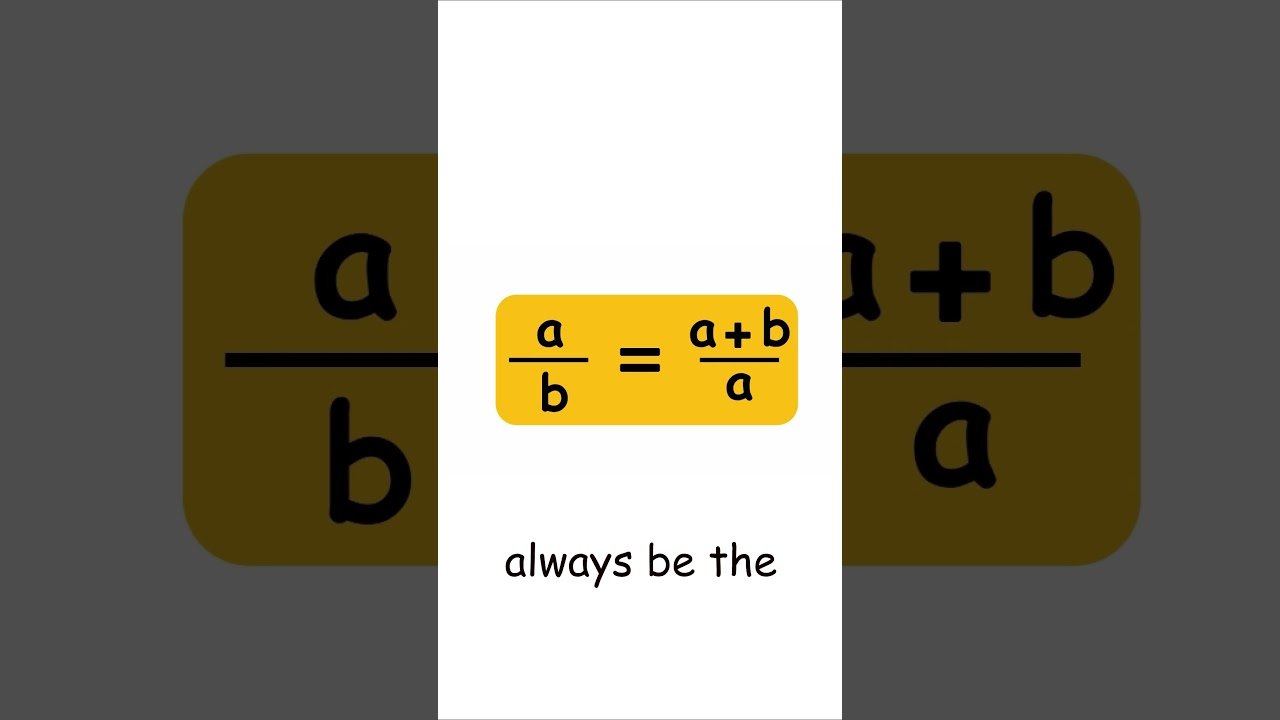
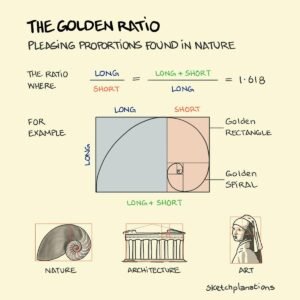
The golden ratio, written as φ and approximately equal to 1.618, appears when a whole is divided so that the ratio of the whole to the larger part equals the ratio of the larger part to the smaller. This proportion shows up in geometry, the Fibonacci sequence, art, architecture, and natural patterns.
Golden spiral. Suppose you have two amounts and the ratio of the larger amount to the smaller amount equals the ratio of the sum of the amounts to the larger amount. In that case, this ratio will always be the same special number, the golden ratio denoted by the Greek letter ph. If we call the larger amount a and the smaller amount b, the golden ratio can be expressed by this equality.
This article was generated from the video transcript of “What Is the Golden Ratio? Understanding φ (Phi)”.
Watch the full video above for visual explanations and diagrams.
Leave a Reply