
Latest ThoughtThrill Projects
Explore our collection of math presentations designed to spark your curiosity.
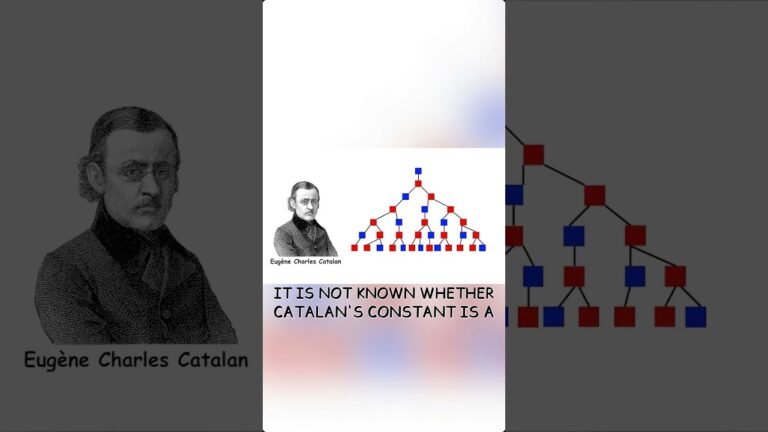
Why Catalan’s Constant Still Puzzles Mathematicians
Catalan’s constant is a well-known mathematical constant defined by the infinite series: It is named after the Belgian mathematician Eugène Charles Catalan, who first…
Read More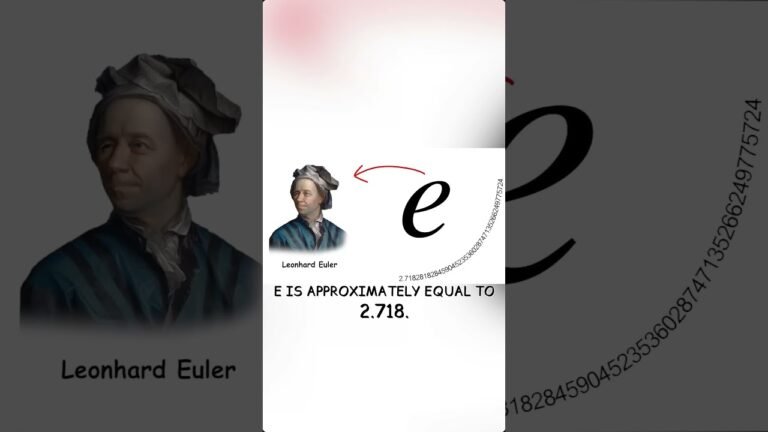
Euler's Number Explained in 30 seconds
Euler’s Number e Overview Applications Properties Overview The mathematical constant e is the base of the natural logarithm, a fundamental logarithmic function. It is…
Read More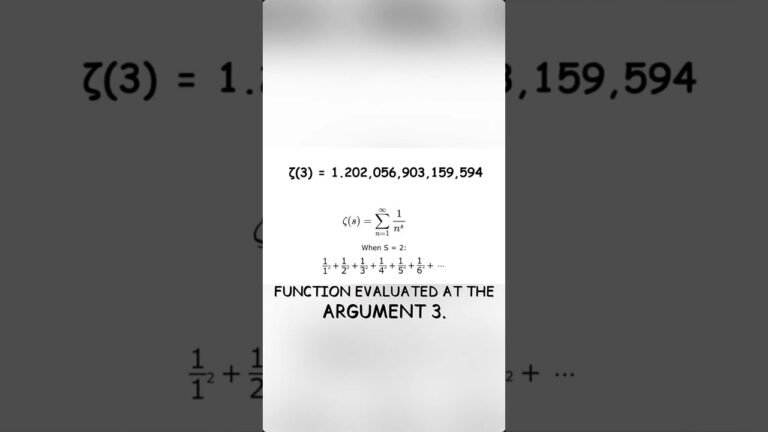
the Irrational Apéry’s Constant Explained
Apéry’s Constant Overview The Riemann Zeta Function Significance Irrationality Apéry’s Constant Overview Apéry’s constant is the value of the Riemann zeta function evaluated at…
Read More
Pi Explained in 30 seconds π
Pi (π) is a fundamental mathematical constant that represents the ratio of a circle’s circumference to its diameter. It was first calculated by the…
Read More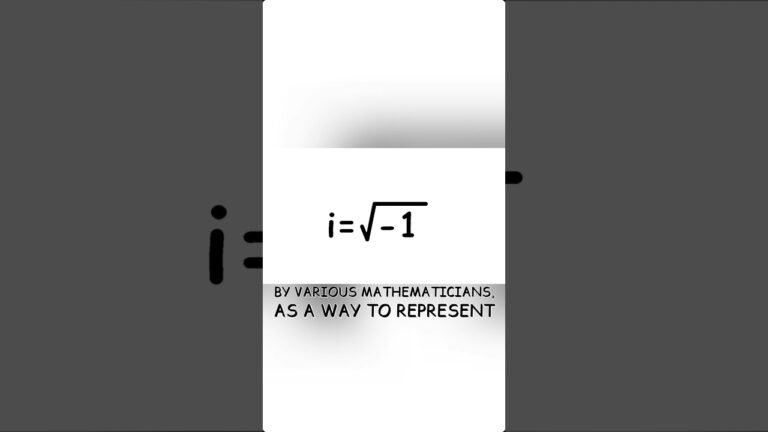
The Imaginary Unit i Explained in 30 Seconds
The imaginary unit i is defined by the rule i² = −1. It was introduced to solve equations that have no real number solutions….
Read More
Conway’s Constant Explained
Conway’s constant, approximately 1.303577, describes the growth rate of the look-and-say sequence. No matter which number you start with, the length of the sequence…
Read More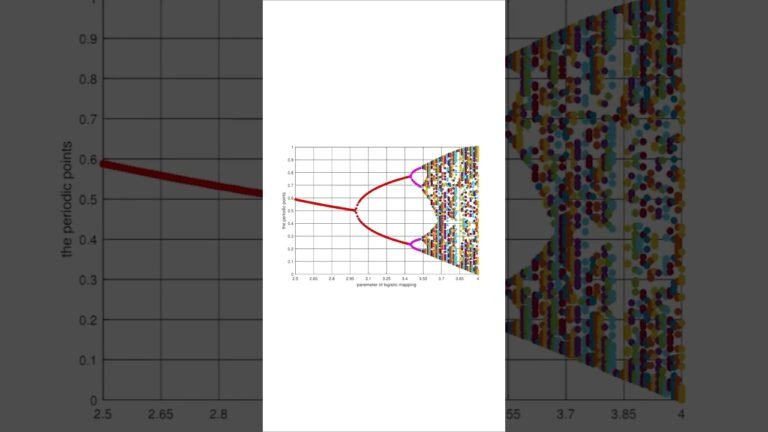
First Feigenbaum Constant (δ) Explained (Chaos Theory)
The first Feigenbaum constant, usually denoted δ, is a universal number that appears in the study of chaos theory. Its approximate value is: δ…
Read More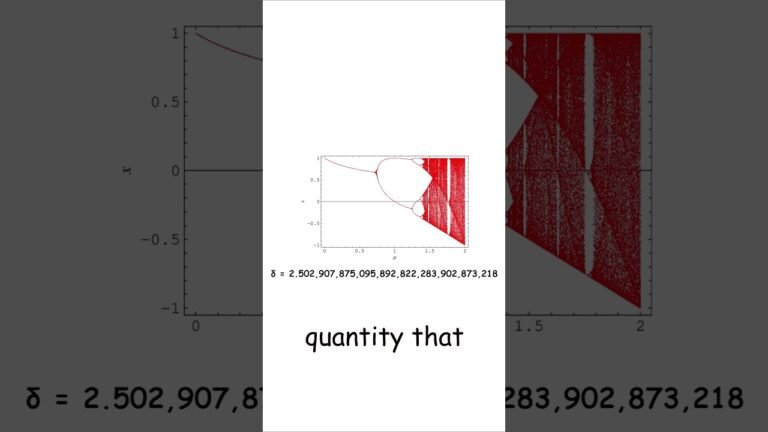
Second Feigenbaum Constant (α) Explained (Chaos Theory)
The second Feigenbaum constant, written as α and approximately equal to 2.503, describes how the size of structures in a chaotic system scales as…
Read More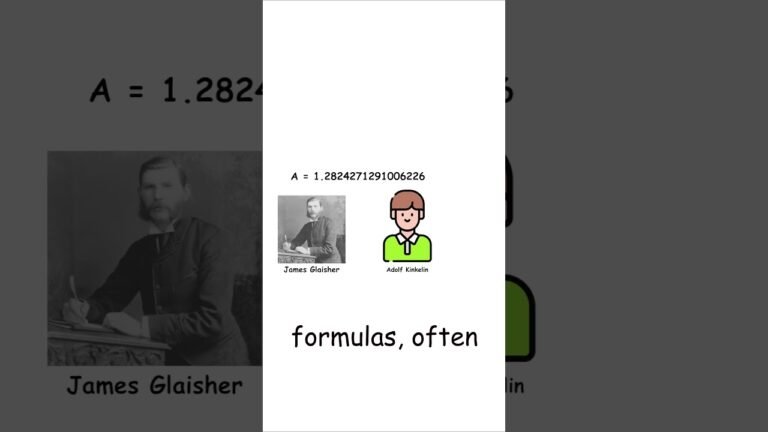
The Glaisher–Kinkelin Constant Explained
The Glaisher–Kinkelin constant, approximately 1.2824, appears in formulas involving large products, factorials, and special functions. It arises naturally when studying how products of integers…
Read More