
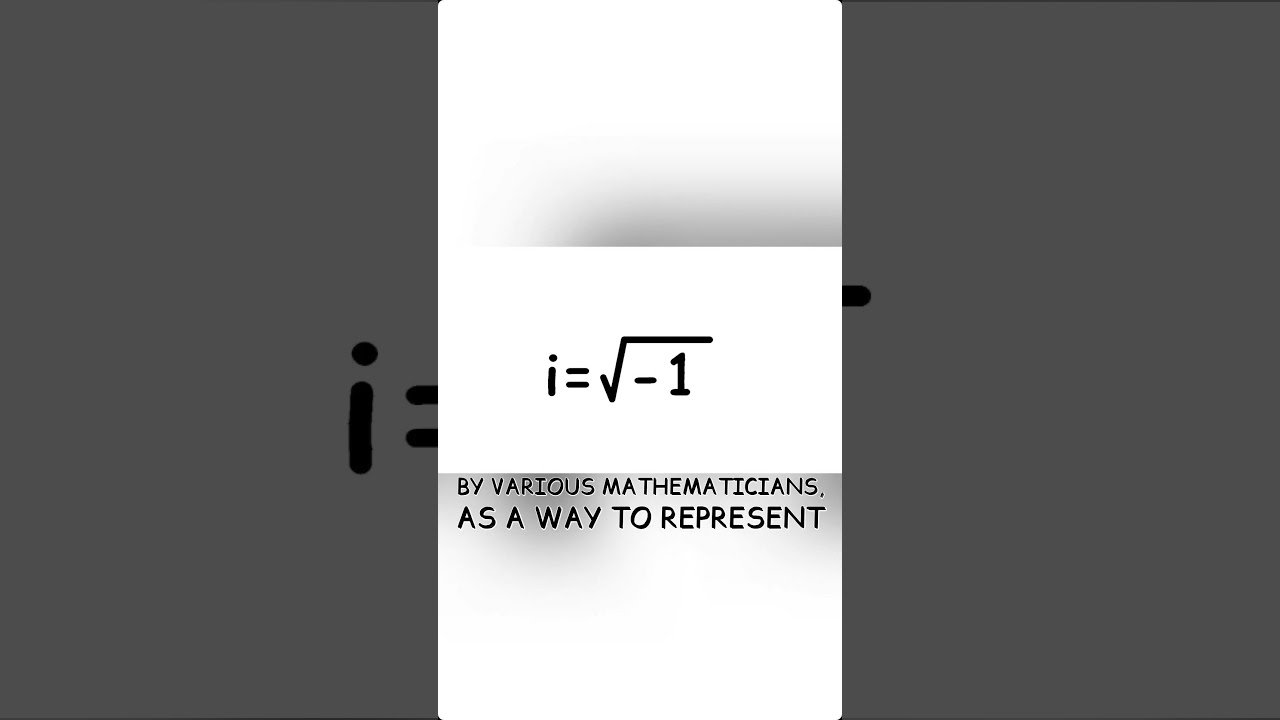
The imaginary unit i is defined by the rule i² = −1. It was introduced to solve equations that have no real number solutions.
Definition and History
The imaginary unit, denoted by the symbol i, is a mathematical constant representing √(−1). The concept of the imaginary unit was developed over time by various mathematicians as a way to represent and work with square roots of negative numbers.
Significance
It is a foundation of complex number theory, which is essential for many areas of mathematics, physics, and engineering, such as electrical engineering and quantum mechanics.
Leave a Reply