Thermal Energy
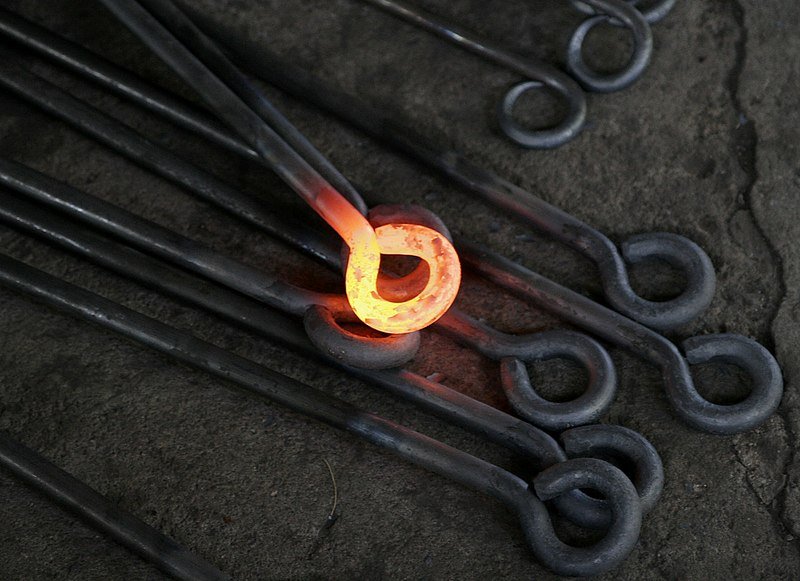
Canon 20D + Tamron 28-75mm f/2.8, GFDL 1.2, via Wikimedia Commons
Thermal energy comes from the vibration of tiny particles in matter. When things get hot, their particles move faster and you feel warmth. Heat is the transfer of thermal energy from one object to another and flows from warmer objects to cooler ones. Not all materials conduct thermal energy the same way. Metal heats up quickly, but wood does not.
Chemical Energy
Chemical energy is stored in the bonds between atoms and molecules, such as in food, batteries, and fuel. When these bonds are broken or changed in a chemical reaction, the stored energy is released and used to do work, such as running a car or powering a rocket.
Food contains chemical energy that your body converts into usable energy. Inside a battery, chemical reactions occur that separate positive and negative charges, creating an electric current when the battery is connected in a circuit.
Nuclear Energy
Nuclear energy is stored in the nucleus of atoms and is released through fission or fusion. Current nuclear reactors work with fission. Fusion, like what powers the sun, is possible but not yet commercially viable.
Nuclear energy is described with Einstein’s famous equation E = mc². Mass-energy equivalence is the principle that mass and energy are interchangeable and are different forms of the same thing. Mass can be converted into a tremendous amount of energy due to the speed of light being a very large number when squared.
Electrical Energy
Electrical energy is carried by the movement of electrons, such as currents in wires and lightning. It is incredibly useful because it can be easily transported through wires and converted into almost any other form of energy. Its drawback is storage. While energy from solid fuel can be stored in a very dense and inert state such as coal, electricity must be used immediately or stored in batteries, which are expensive, heavy, and lose charge over time.
One of the most famous pioneers in electricity was Benjamin Franklin. In 1752, he flew a kite during a thunderstorm with a metal key attached to the string and proved that lightning is really a giant electric spark. His work led to the invention of the lightning rod, which protects structures from lightning strikes by diverting the energy to the ground. Franklin also coined the terms “positive” and “negative.”
Dark Energy
Dark energy is one of the biggest mysteries in modern physics. While every other form of energy comes from motion, heat, or forces we can observe, dark energy is different. It appears to be a property of space itself.
In 1998, astronomers studying distant supernovae discovered that the universe is not just expanding, but expanding faster over time. That was completely unexpected. To explain this accelerating expansion, scientists proposed dark energy, a form of energy permeating all of space, creating a repulsive effect that pushes galaxies apart. Dark energy makes up roughly 68% of all energy in the universe, yet we cannot detect it directly, measure it in a lab, or observe it interacting with matter in any traditional way.
Electromagnetic Energy
Electromagnetic energy travels through space as waves that do not require any medium and can move through the vacuum of space at the speed of light. Electromagnetic waves include visible light, ultraviolet light, radio waves, x-rays, microwaves, and gamma rays. All of these are electromagnetic energy at different wavelengths.
These waves are created by the vibration of electric and magnetic fields perpendicular to each other. The electromagnetic spectrum encompasses an enormous range of wavelengths and frequencies, each with different properties and uses. At the long wavelength end, radio waves can stretch kilometers long and are used for broadcasting and communication. Gamma rays have the shortest wavelengths and highest energy, produced by radioactive decay and cosmic events. Remarkably, all these forms of radiation are fundamentally the same phenomenon, just electromagnetic waves at different frequencies.
Sound Energy
Sound energy travels as vibrations through matter: air, water, or solid objects. When you speak, your vocal cords vibrate, creating sound waves that travel through the air to someone’s ears. Animals such as whales use sound waves to communicate with each other across long distances. Sound energy has even been weaponized with the invention of sonic weapons. Ultrasound is used in medicine to look inside bodies without surgery. Unlike electromagnetic waves, sound needs a medium to travel through, which is why there is no sound in the vacuum of space.
Hydropower
Hydropower uses the gravitational potential energy of water. Gravity turns the water kinetic, pushing it through turbines. Spinning turbines spin a shaft inside a generator, which spins a rotor containing magnets, generating a magnetic field that induces an electric current in surrounding coils through the process of electromagnetic induction, first demonstrated by Michael Faraday in 1831. This process converts mechanical energy into electrical energy.
Thanks to the water cycle, hydropower is a highly renewable and reliable energy source, powering 100% of Paraguay, Albania, and Norway, and about 15% of the world’s total electricity. However, it is limited by geology to specific locations throughout the world.
Wind Energy
Wind energy is kinetic energy present in moving air. It has been harnessed throughout history to sail ships, grind grain, and pump water. Today, wind turbines generate electricity through magnetic induction caused by spinning blades.
Geothermal Energy
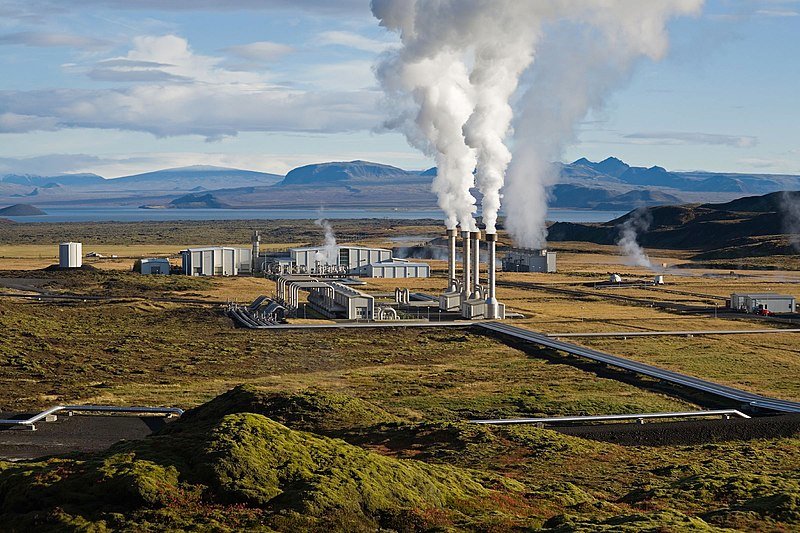
Geothermal energy comes from within the Earth. Deep underground, the Earth is incredibly hot. This energy is harnessed by using the Earth’s heat to produce steam, which spins a turbine, creating electricity through electromagnetic induction. Like fusion, geothermal energy is nearly infinite but is limited by economic viability.
Some of this heat reaches the surface naturally as steam or hot springs, which humans have used for bathing and heating for thousands of years. Iceland uses its abundant volcanic geothermal energy to heat its homes and buildings through a network of insulated pipes. Geothermal energy is especially powerful near tectonic plate boundaries, such as in Iceland, Japan, or parts of the western United States.
Solar Energy
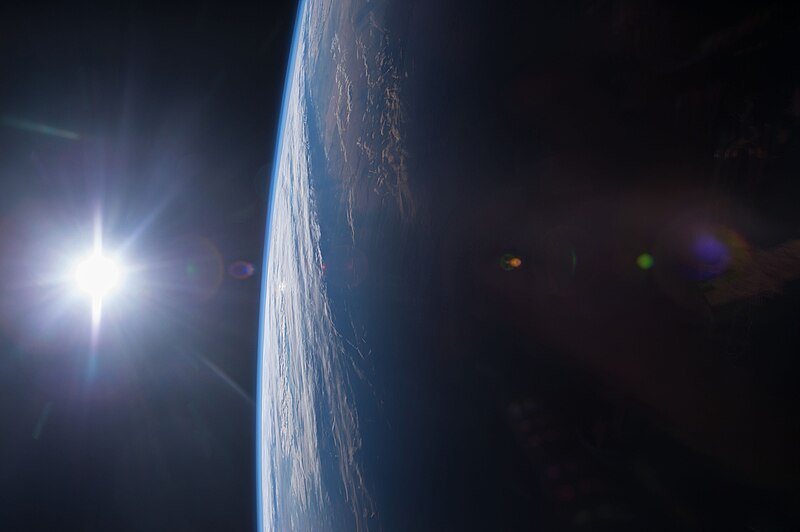
Solar energy comes from the sun and is a type of electromagnetic energy. Plants use it in photosynthesis to create chemical energy. Solar panels harness the electromagnetic radiation emitted by the sun, primarily in the form of visible light and infrared radiation.
Photovoltaic cells convert light directly into electricity through the photoelectric effect. When photons strike semiconductor materials like silicon, they knock electrons loose, creating an electric current. The main challenge holding back universal adoption is intermittency. Solar panels cannot generate electricity at night or during cloudy weather. However, rapid improvements in battery storage technology are allowing excess solar energy to be stored and used on demand, steadily making solar energy more practical and reliable as a primary power source.
Seismic Energy
Seismic energy is released during earthquakes, volcanic eruptions, landslides, and explosions. It propagates through the Earth as body waves (P-waves and S-waves) and surface waves (Love waves and Rayleigh waves). Each 0.2 increase in magnitude roughly doubles the energy released, while each whole number magnitude increase represents about 32 times more energy released.
Mechanical Wave Energy
Mechanical wave energy is the sum of kinetic and potential energy. It consists of vibrations traveling through matter and includes sound and seismic waves. Other types of waves requiring a medium include water waves and pressure waves, such as shock waves from explosions or supersonic aircraft. These waves carry massive amounts of mechanical energy and can cause significant damage because of the intense compression of air.
When waves roll across the ocean, the water itself does not travel forward very far. Instead, energy moves through the water, transferring momentum from molecule to molecule until the wave eventually crashes on shore. This is why storms or earthquakes hundreds of miles away can generate powerful waves that reach distant coastlines.
Magnetic Energy
Magnetic energy is energy stored in magnetic fields, such as in magnets, MRI machines, or inductors. When you push two magnets together with the same poles facing, your hand is doing work against a magnetic field, storing magnetic potential energy.
Electric currents also create magnetic fields, so devices like inductors, transformers, motors, and generators rely heavily on magnetic energy. When current flows through a coil, it builds a magnetic field around it. When the current changes, the collapsing magnetic field induces a voltage. This is the principle behind nearly every modern electrical system, and it all stems from magnetic energy stored in the field around the conductor.
Phase Change Energy
Phase change energy is the hidden energy involved when a substance changes state, such as melting, freezing, boiling, or condensing. Unlike normal heating where temperature rises as heat is added, phase changes absorb or release large amounts of energy without changing the temperature at all.
For example, when ice melts into water, it absorbs heat from the environment, but its temperature stays at 0°C until all the ice is gone. This energy is called the latent heat of fusion. The same happens when water boils. Its temperature stays at 100°C even though the pot is receiving huge amounts of heat. That heat is the latent heat of vaporization.
Gravitational Potential Energy
Objects with height in a gravitational field have potential energy because gravity can pull them down. The higher and heavier something is, the more gravitational energy it stores. When a roller coaster climbs up a tall hill, it builds up gravitational energy, which turns into kinetic energy as it rushes downward.
Elastic Potential Energy
Elastic potential energy is stored when something is stretched or compressed, like springs, rubber bands, and bows. When you pull back a bow, you are packing it with elastic energy. When you let go, the energy is released and sends the arrow flying. The object wants to return to its original shape, and that stored energy can do work when released.
The Big Picture
All energy can be classified as either kinetic or potential. Kinetic energy is the energy of motion. The faster something moves and the more mass it has, the more kinetic energy it contains. Potential energy is stored energy.
All these different forms of energy are connected by a fundamental rule of the universe: the first law of thermodynamics, which states that energy cannot be created or destroyed. It can only be transformed from one form to another. The total amount of energy always stays the same.
Leave a Reply