
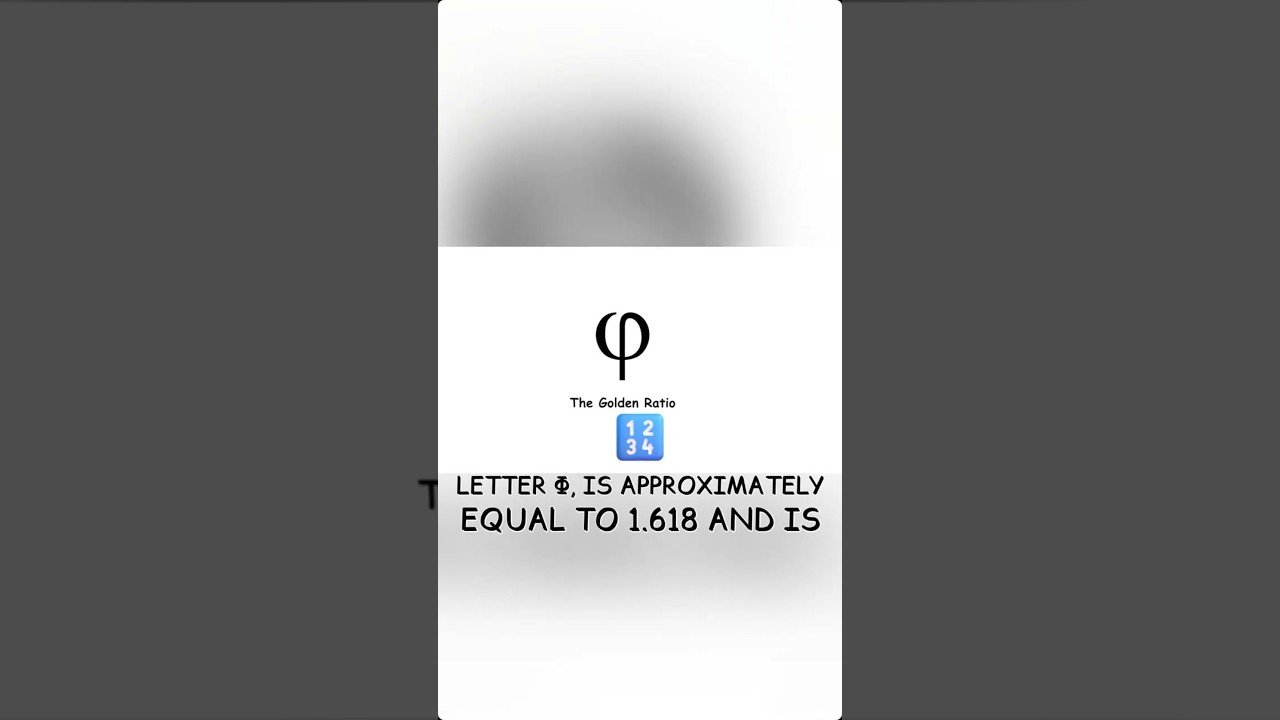
The golden ratio, represented by the Greek letter φ (phi), is approximately equal to:
φ ≈ 1.61803…
It is defined as a ratio where the ratio of the whole to the larger part is equal to the ratio of the larger part to the smaller part. In other words, if you have a line segment divided into two parts, the golden ratio describes a perfect proportion where the longer part is to the shorter part as the whole line is to the longer part:
(a + b) / a = a / b = φ
The Golden Ratio in Nature
This unique ratio has been observed in many natural phenomena, from the spiral patterns of seashells to the branching of trees. It appears in the arrangement of petals in flowers, the proportions of pinecones, and the spiral arms of galaxies.
The Golden Ratio in Art and Design
The golden ratio is also widely used in art, architecture, and design, as it is often considered to be an aesthetically pleasing proportion. The Parthenon in Athens, Leonardo da Vinci’s Vitruvian Man, and Salvador Dalí’s The Sacrament of the Last Supper are all frequently cited as examples of the golden ratio in practice. Modern designers and photographers often use the closely related golden spiral as a compositional guide.
A Number That Never Ends
The golden ratio is an irrational number, meaning its decimal representation goes on forever without repeating. It is also closely connected to the Fibonacci sequence (1, 1, 2, 3, 5, 8, 13, 21, …), where each number is the sum of the two before it. As you move further along the sequence, the ratio between consecutive Fibonacci numbers gets closer and closer to φ, converging on it in the limit.
Leave a Reply