The Tesseract: A Cube in Four Dimensions
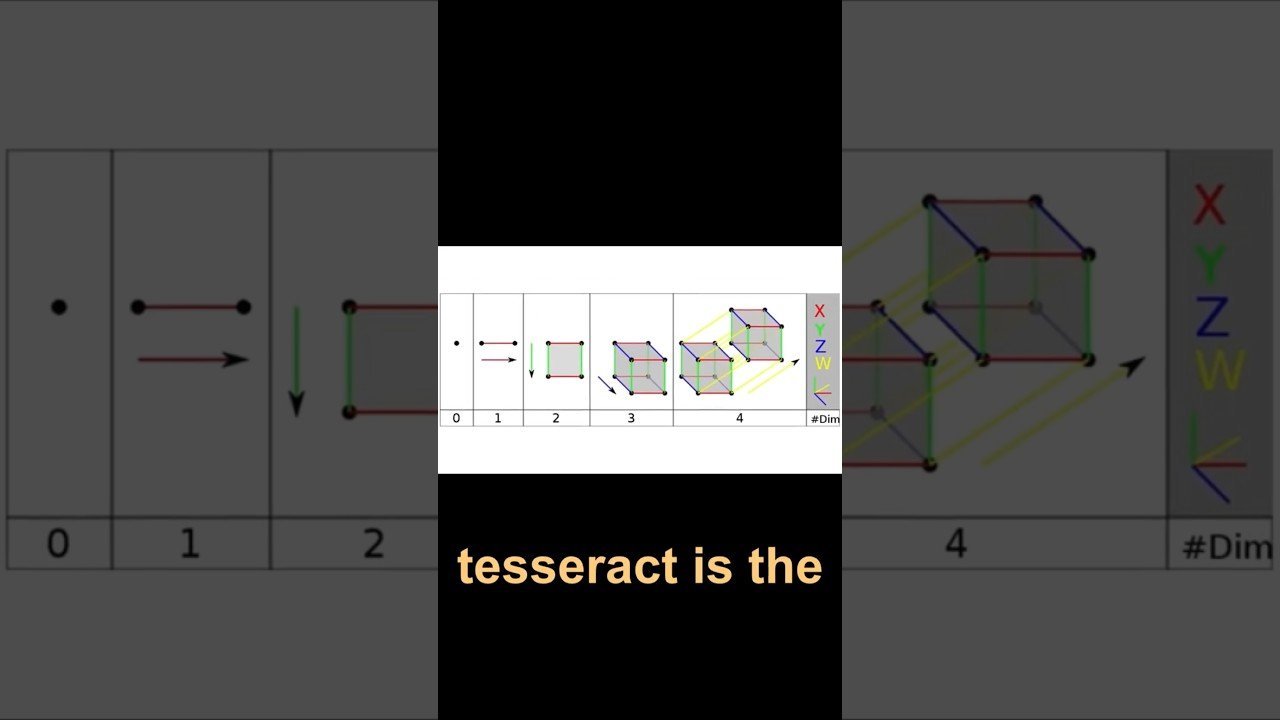
The tesseract is the four-dimensional analog of the cube. Just as a line segment is formed by connecting two points, a square by connecting four line segments, and a cube by connecting six squares, a tesseract is formed by connecting eight cubes. These eight cubes are called the facets of the tesseract. For each dimension n, the analog of the cube is known as the n-dimensional hypercube.
Visualizing the Fourth Dimension
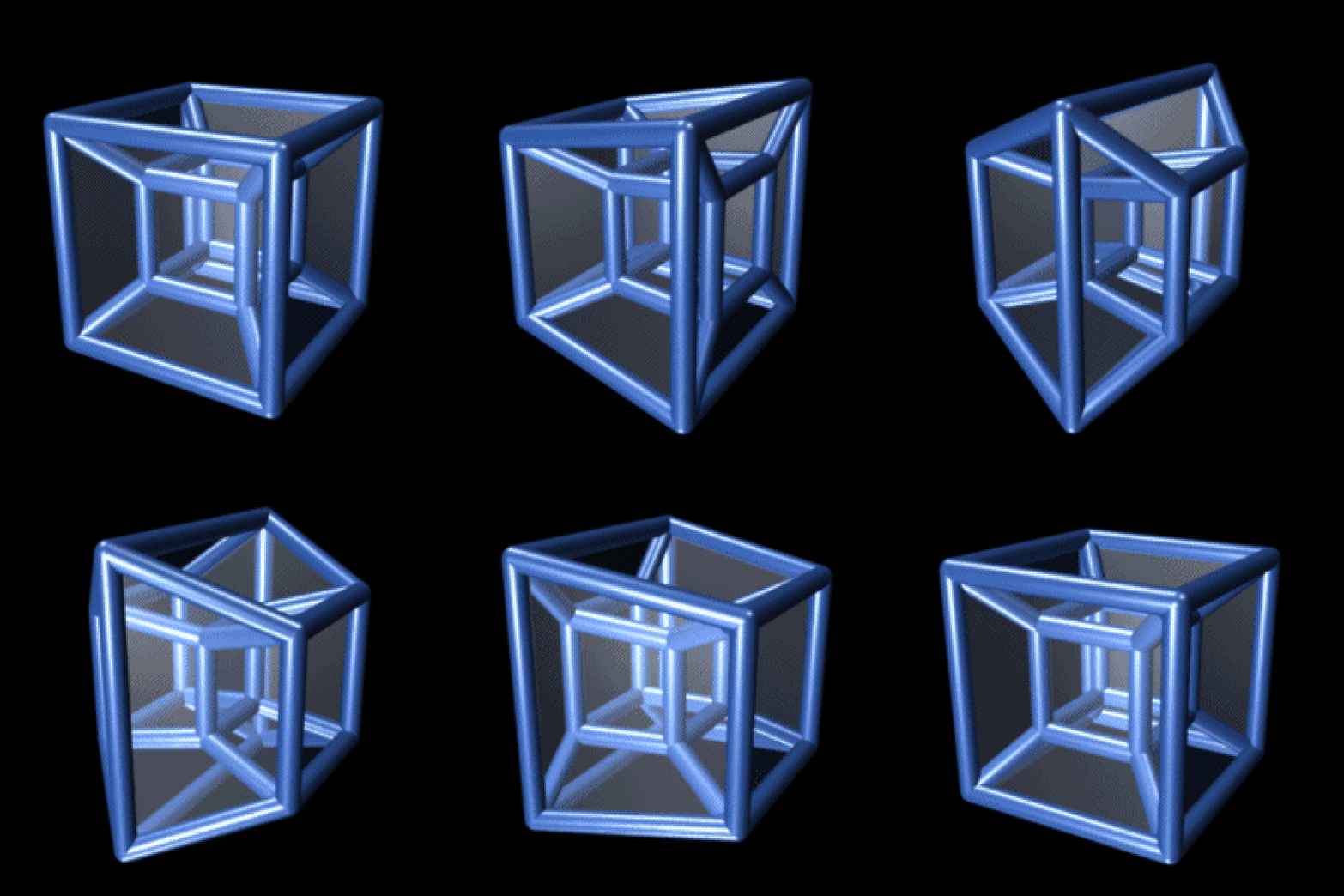
Four-dimensional shapes are difficult to visualize in a world with only three dimensions of space. However, one option is to look at its 3D projection. Just as the 2D projection of a 3D object can be thought of as its 2D shadow, the 3D projection of a 4D object can be thought of as its 3D shadow.
The most familiar 3D projection of a tesseract is the “inner cube within an outer cube” image, where the eight cubic facets appear distorted, just as the faces of a cube appear distorted when projected onto a 2D surface at an angle. A tesseract has 16 vertices, 32 edges, 24 square faces, and 8 cubic facets. Each vertex connects to exactly four edges, mirroring how each vertex of a cube connects to three.
Leave a Reply