
Andrew Wiles and Fermat’s Last Theorem
For over 350 years, Fermat’s Last Theorem was one of the most famous and frustrating problems in mathematics. Formulated by Pierre de Fermat in the 17th century, it stated that there are no positive integers a, b, and c that satisfy the equation aⁿ + bⁿ = cⁿ, where n is an integer greater than 2.
Fermat wrote in the margin of his copy of Arithmetica that he had a truly marvelous proof, but it was never found. For centuries, great mathematicians tried without success.
In 1994, Andrew Wiles, after 7 years of secret work, presented a complete proof using advanced tools of number theory, including modular forms and elliptic curves. His solution connected entire branches of modern mathematics, finally solving a mystery that had haunted generations. His achievement made him a global mathematical celebrity.
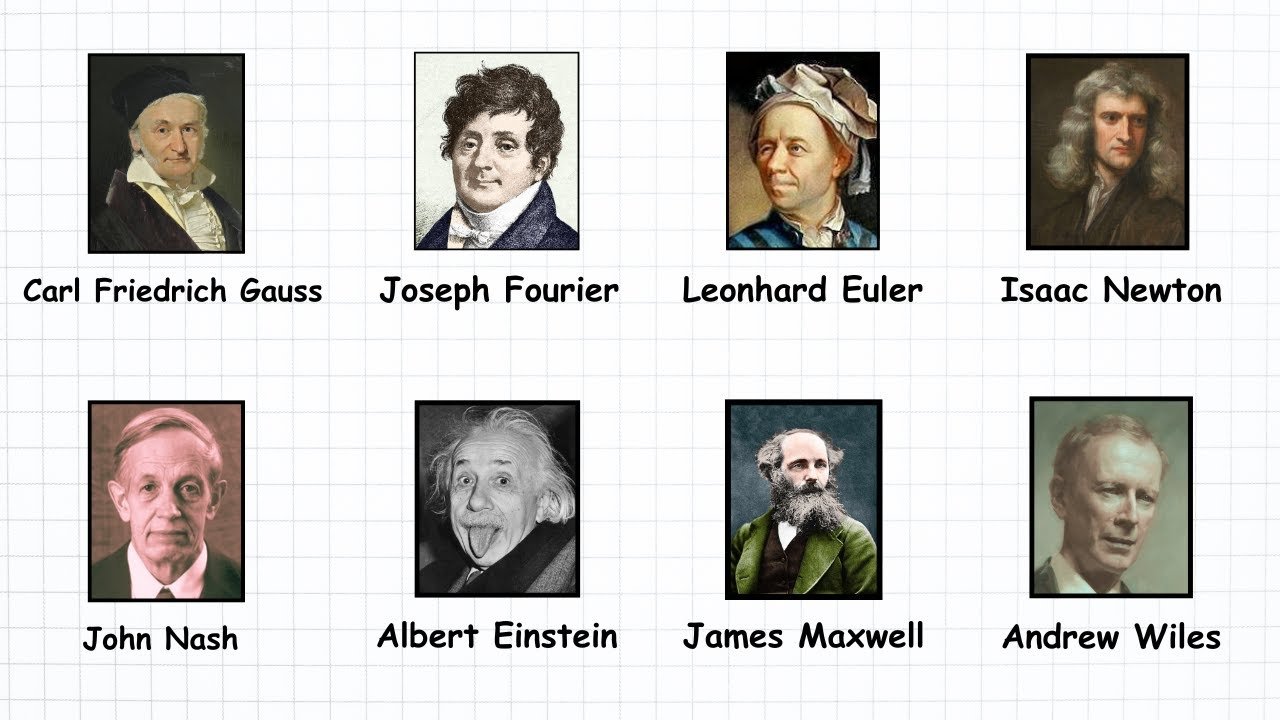
Carl Friedrich Gauss and the 17 Gon
In 1796, at the age of 19, Carl Friedrich Gauss astonished the mathematical world by demonstrating that a regular 17 sided polygon, also called a heptadecagon, could be constructed with a ruler and compass. Nothing similar had been achieved since the time of the Greeks.
Gauss showed that the construction was possible because 17 is a Fermat prime. He proved that a regular polygon with n sides is constructible with a compass and straightedge if
n = 2ᵏ × p₁ × p₂ × … × pₛ
where k and s are non negative integers and each pᵢ is a distinct Fermat prime.
This condition is met when n = 17. This discovery brought immediate fame to Gauss and laid the foundation for his later work Disquisitiones Arithmeticae, making him a central figure in modern mathematics.
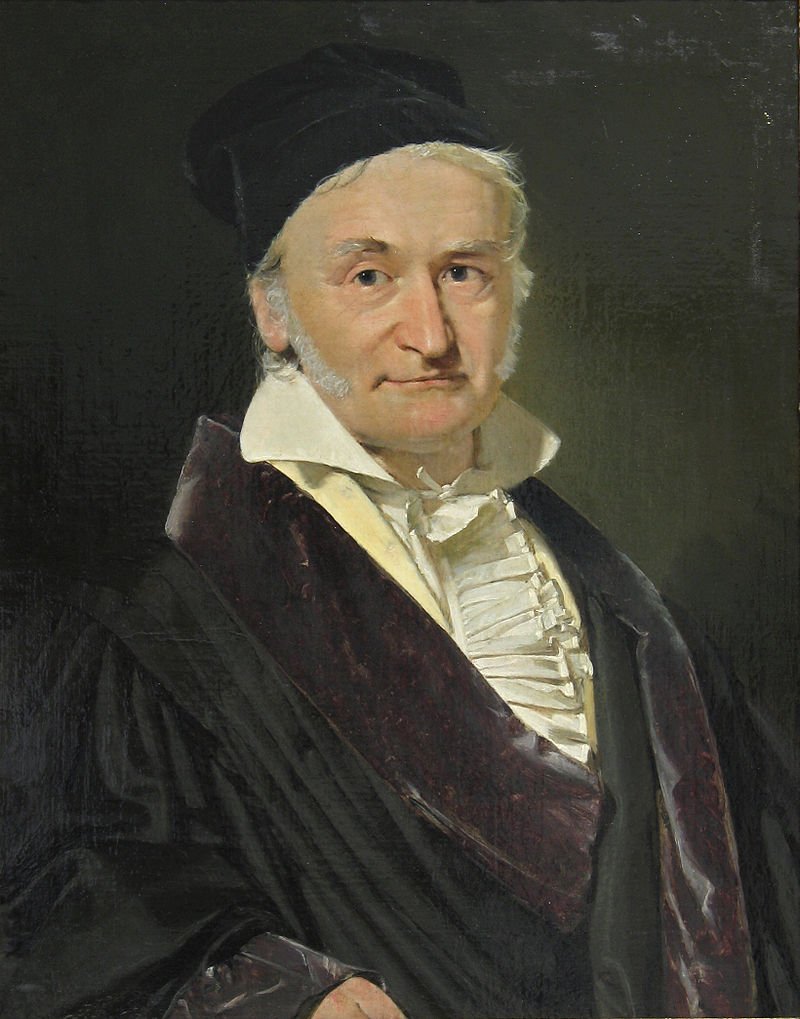
Joseph Fourier and Fourier Series

Joseph Fourier transformed mathematical analysis by proposing that any periodic function can be expressed as a sum of sines and cosines. This idea arose from his study of heat transfer in solid bodies.
The Fourier series of a periodic function f(x) is defined as
f(x) = a₀ / 2 + ∑ from n = 1 to ∞ of (aₙ cos(nx) + bₙ sin(nx))
where the coefficients aₙ and bₙ determine the contribution of each sinusoidal component.
This idea made it possible to represent complex phenomena using simple waves. Although his work was initially criticized, his methods became fundamental to physics, engineering, and signal processing. Today, Fourier theory is essential in harmonic analysis, acoustics, digital imaging, and quantum theory. His impact extended far beyond pure mathematics.
Leonhard Euler and the Bridges of Königsberg
In the 18th century, the city of Königsberg in East Prussia, later Germany and today Kaliningrad in Russia, had seven bridges connecting different parts of the city over the Pregel River. The challenge was to cross all the bridges exactly once without repeating any.
The question seemed simple, but no one could solve it.
In 1736, Leonhard Euler addressed the problem and showed that it was unsolvable. He abstracted the situation into vertices and edges, giving rise to graph theory. He proved that for such a traversal to be possible, each vertex must have an even number of connected edges.
Euler showed that the Königsberg bridge problem had no solution under the given conditions. His work introduced a new way of thinking about mathematics, topology, and network structure. It is considered the first theorem of graph theory, a fundamental area in mathematics, computer science, and logistics.
Isaac Newton and the Law of Universal Gravitation
In the 17th century, Isaac Newton unified celestial and terrestrial motion with a single law, universal gravitation.
According to his theory, every particle in the universe attracts every other particle with a force proportional to their masses and inversely proportional to the square of the distance between them.
The formula is
F = G × (M₁ × M₂) / R²
where F is the gravitational force, M₁ and M₂ are the masses, R is the distance between them, and G is the universal gravitational constant.
This discovery explained both the fall of an apple and the orbits of planets, revolutionizing physics and establishing a mechanistic view of the universe. His work Philosophiæ Naturalis Principia Mathematica laid the foundations of classical physics.
John Nash and the Nash Equilibrium
In the 1950s, John Nash transformed game theory with the concept of the Nash equilibrium. It describes a situation in which no player can improve their individual outcome if the others maintain their strategies.
Formally, in a game with n players, a strategy profile (S₁, S₂, …, Sₙ) is a Nash equilibrium if, for each player i with utility function Uᵢ, the equilibrium strategy Sᵢ* satisfies
Uᵢ(Sᵢ*, S₋ᵢ) ≥ Uᵢ(Sᵢ, S₋ᵢ)
for every alternative strategy Sᵢ available to player i.
The Nash equilibrium formalized rational behavior in strategic systems. His work, initially ignored, gained global recognition decades later, culminating in the Nobel Prize in Economics in 1994. His life was later adapted into the film A Beautiful Mind.
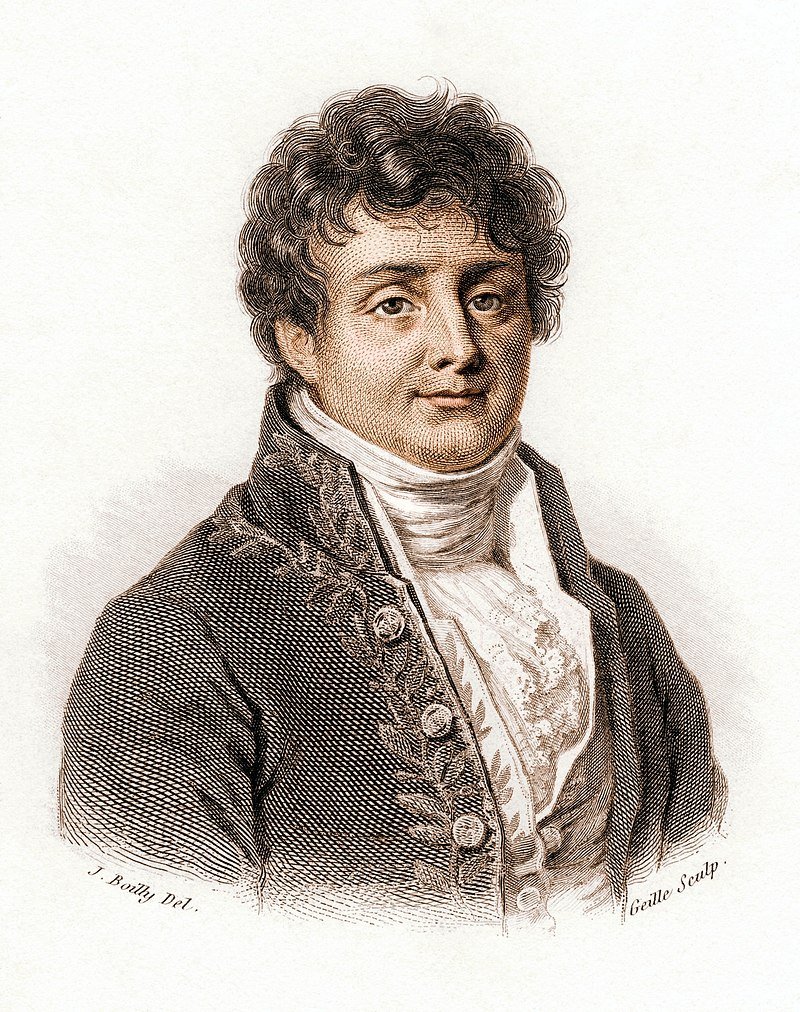
Albert Einstein and General Relativity
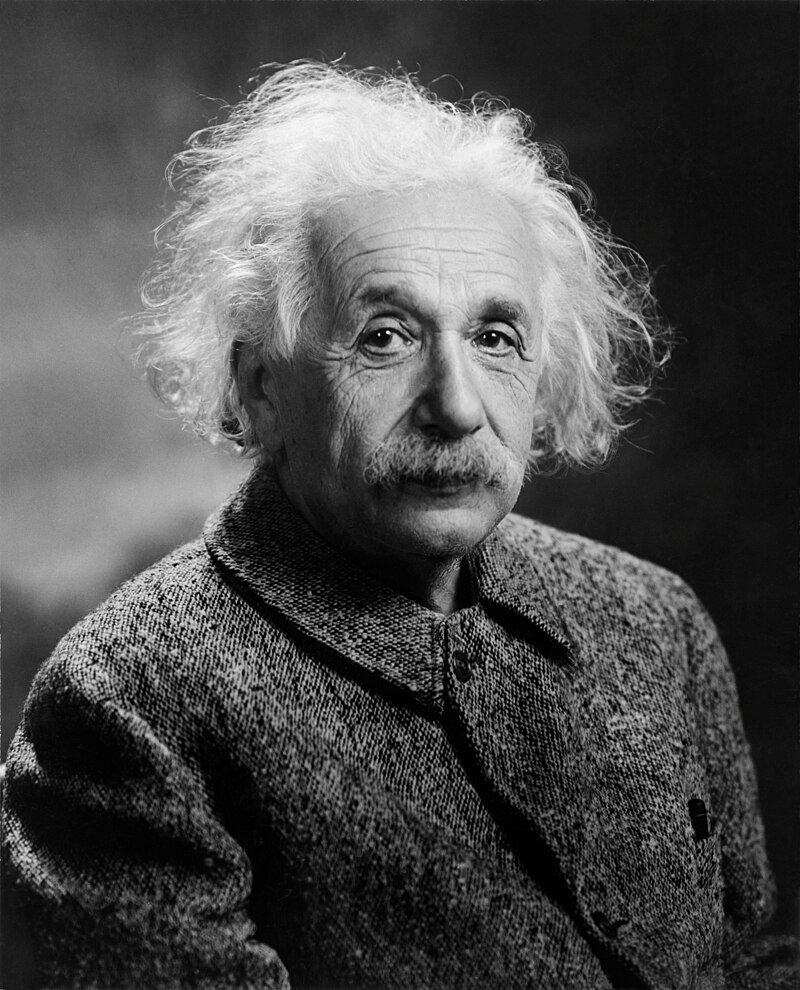
In 1915, Albert Einstein presented the theory of general relativity, transforming our understanding of space, time, and gravity.
Instead of treating gravity as a force, he proposed that massive objects curve spacetime, and this curvature determines the motion of other bodies.
Einstein’s field equation can be written as
Gμν + Λgμν = (8πG / c⁴) Tμν
Here Gμν represents spacetime curvature, Λ is the cosmological constant, gμν is the metric tensor, Tμν is the energy momentum tensor, G is the gravitational constant, and c is the speed of light.
The theory predicted phenomena such as the bending of light by gravity, confirmed experimentally in 1919. It remains one of the foundations of modern physics.
James Clerk Maxwell and Maxwell’s Equations
In the 19th century, James Clerk Maxwell unified electricity and magnetism into a single mathematical framework. He formulated four equations describing how electric and magnetic fields interact and propagate.
They are:
∇ · E = ρ / ε₀
∇ · B = 0
∇ × E = − ∂B / ∂t
∇ × B = μ₀J + μ₀ε₀ ∂E / ∂t
These equations describe how electric fields and magnetic fields generate and influence one another. One of their most important consequences was the prediction that light is an electromagnetic wave.
Their impact transformed modern physics, laying the foundations for electromagnetic theory, radio, electronics, and much of modern technology.
Further Reading
-
Andrew Wiles, “Modular Elliptic Curves and Fermat’s Last Theorem,” Annals of Mathematics, 1995
-
Carl Friedrich Gauss, Disquisitiones Arithmeticae
-
Joseph Fourier, Théorie Analytique de la Chaleur
-
Leonhard Euler, “Solutio problematis ad geometriam situs pertinentis,” 1736
-
Isaac Newton, Philosophiæ Naturalis Principia Mathematica
-
John Nash, “Equilibrium Points in n Person Games,” 1950
-
Albert Einstein, “Die Feldgleichungen der Gravitation,” 1915
Leave a Reply