
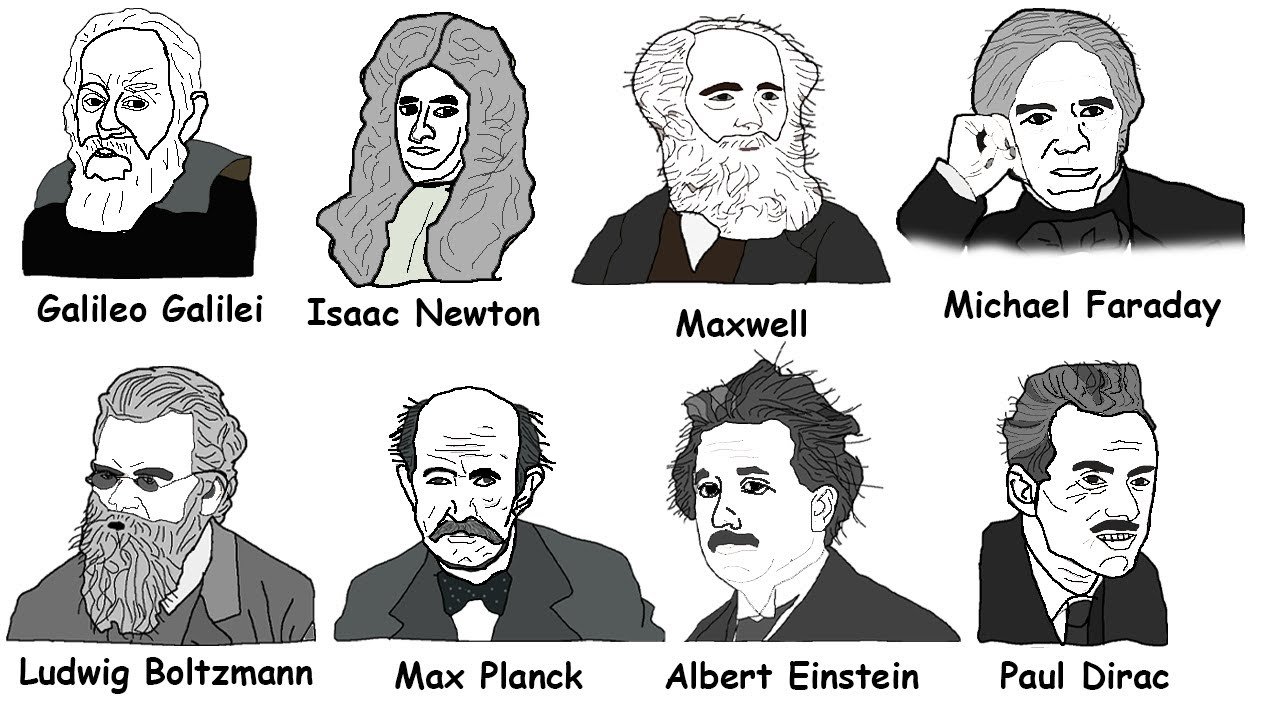
Galileo Galilei
Born in Pisa, Galileo initially trained as a doctor, studying medicine at the University of Pisa. He shifted to mathematics but left due to financial issues, later returning as a professor. On hearing of the invention of the telescope in 1609, he built his own and made a series of groundbreaking discoveries: the Milky Way is a large collection of stars, the Earth revolves around the Sun (and not vice versa, as Aristotle believed), there are spots on the Sun, the surface of the Moon is not flat but has mountains and craters, and Jupiter has four moons. Although there are actually 67 known Jovian moons, Galileo called his four the Medicean stars. In modern astronomy they are known as Europa, Ganymede, Io, and Callisto.
His idea that the Earth revolves around the Sun got Galileo into considerable trouble with the Catholic Church, and he was forced to abandon that position in 1633. His work on falling bodies also laid the groundwork for Newton’s subsequent theories.
Isaac Newton
Co-inventor of calculus, a major contributor to the science of optics, and a gifted mathematician, Isaac Newton was born in Lincolnshire. His mother wanted him to be a farmer, but he went on to outline the laws of mechanics that now underpin vast swaths of classical physics. Most important of all, Newton outlined the principle of gravity, which explained how the planets revolve around the Sun.
During his life he was showered with honors, including the presidency of the Royal Society. He is renowned as a supreme rationalist, though he actually wrote more about alchemy and religion, including a 300,000-word treatise that attempted to prove the Pope was really the Antichrist. Among his other research projects, Newton analyzed the Bible in an attempt to find secret messages about how the universe works. He was knighted by Queen Anne in 1705 and published two major works: Mathematical Principles of Natural Philosophy (commonly called the Principia) and Opticks.
Michael Faraday
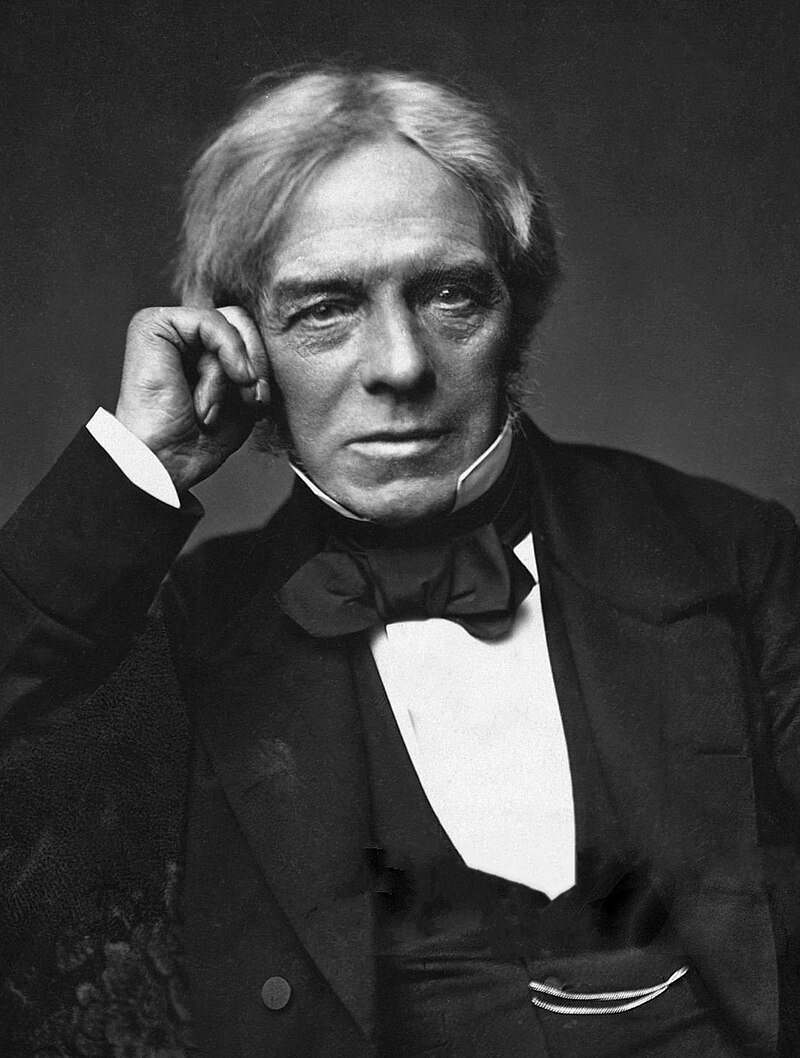
Largely self-educated, Faraday became one of the greatest scientists of his day thanks to the patronage of the eminent English chemist Humphry Davy, who hired him as an assistant in 1813. Faraday was the son of a blacksmith. He was apprenticed to a bookbinder at age 14 and read all the scientific books in the shop.
Faraday went on to establish the idea of the electromagnetic field and discovered electromagnetic induction and the laws of electrolysis. His electromagnetic devices formed the foundation of electric motor technology. James Clerk Maxwell later took the work of Faraday and others and summarized it in a set of equations, which is accepted as the basis of all modern theories of electromagnetic phenomena.
Faraday was an excellent experimentalist who conveyed his ideas in clear and simple language. His mathematical abilities, however, did not extend as far as trigonometry and were limited to the simplest algebra. He twice rejected offers of a knighthood, and when asked to advise on chemical weapons for the Crimean War effort, he refused on ethical grounds. Einstein kept a picture of Faraday on his study wall alongside pictures of Newton and Maxwell. Two of Faraday’s favorite books were the Encyclopædia Britannica and Conversations on Chemistry.
James Clerk Maxwell
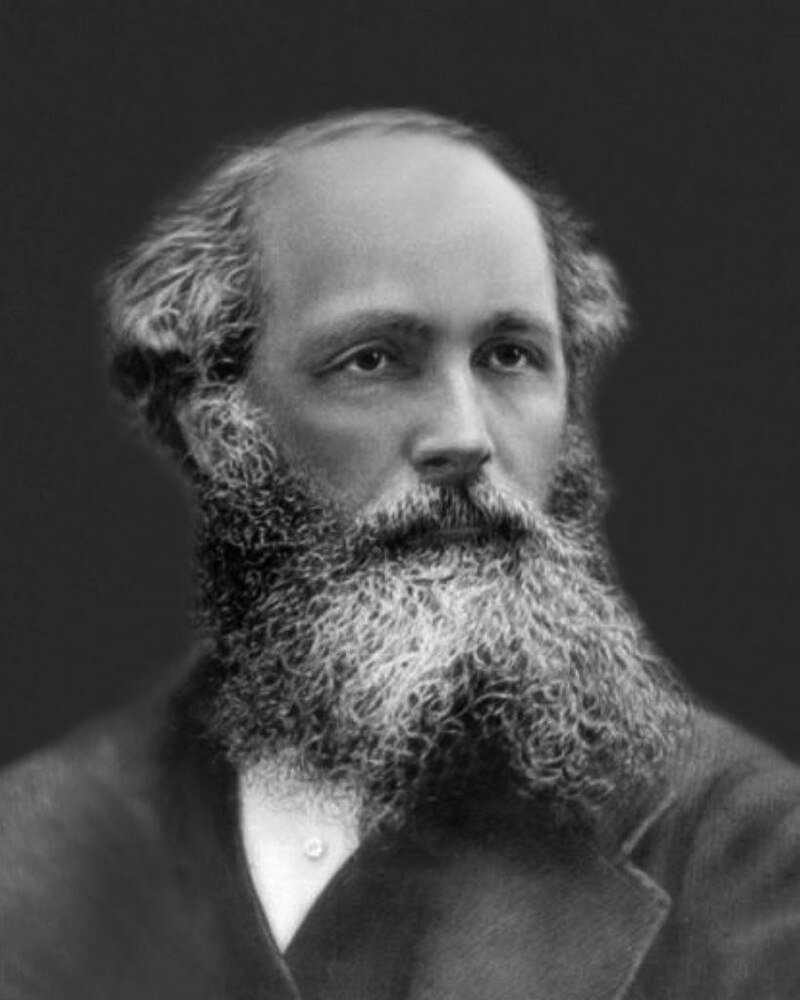
In contrast to Newton and Einstein, Edinburgh-born Maxwell is virtually unknown to the general public, yet his contribution to physics was every bit as significant, particularly his discovery of the theory of electromagnetism. This showed that electricity, magnetism, and light are all manifestations of the same phenomenon: the electromagnetic field. The development of radio, TV, and radar were the direct consequences.
With his wide physical and mathematical intuition, Maxwell explained the action of Saturn’s rings over 100 years before the Voyager spacecraft established that he was absolutely right. Maxwell wrote his first scientific paper at the age of 14 (Einstein was 16 when he wrote his first). Maxwell’s equations for electromagnetism have been called the second great unification in physics, after the first realized by Isaac Newton. He also carried out pioneering work in optics and color vision. However, in his later years, his God-fearing Scottish upbringing brought him into dispute with the evolutionary thinking of Darwin and others, and he wrote papers denouncing natural selection.
Ludwig Boltzmann
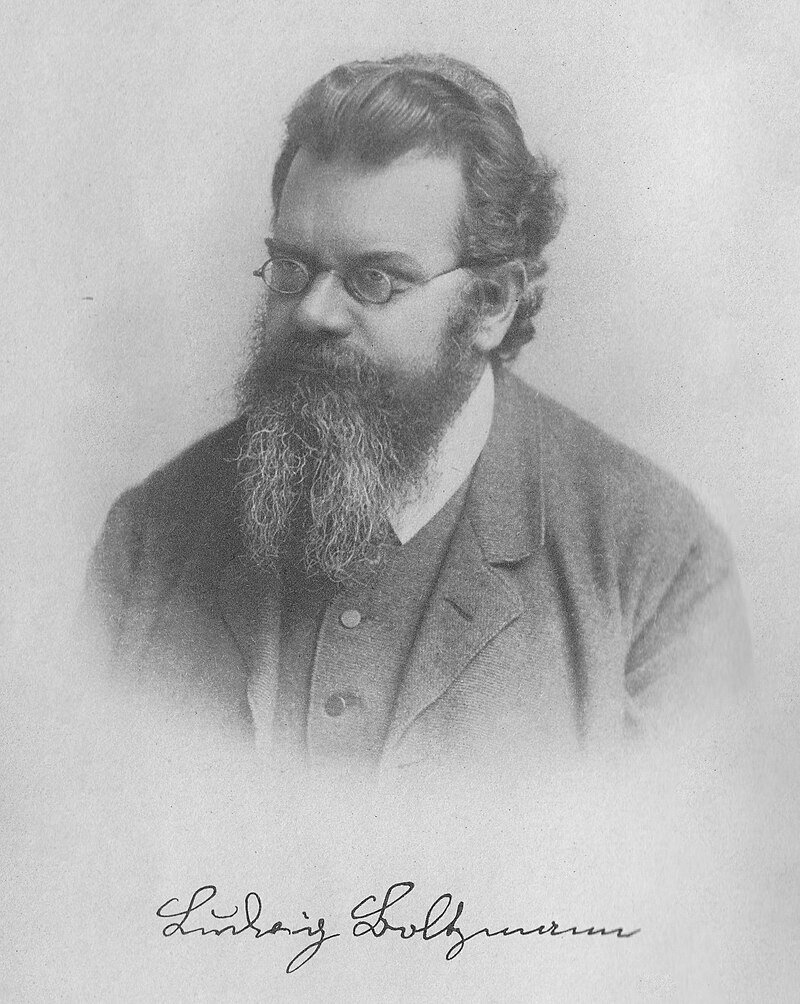
Ludwig Boltzmann was an Austrian physicist whose efforts radically changed several branches of physics. His greatest achievements were the development of statistical mechanics and the statistical explanation of the second law of thermodynamics.
Statistical mechanics is one of the pillars of modern physics. It describes how macroscopic observations such as temperature and pressure are related to microscopic parameters that fluctuate around an average. It connects thermodynamic quantities such as heat capacity to microscopic behavior, whereas in classical thermodynamics the only available option would be to measure and tabulate such quantities for various materials.
Most chemists since the discoveries of John Dalton in 1808, James Clerk Maxwell in Scotland, and Josiah Willard Gibbs in the United States shared Boltzmann’s belief in atoms and molecules, but much of the physics establishment did not share this belief until decades later. Despite his contributions to physics, Boltzmann faced significant opposition and criticism during his lifetime and struggled with depression and mental illness. However, his work has had a lasting impact on the field, and he is remembered as one of the greatest physicists of the 19th century.
J.J. Thomson
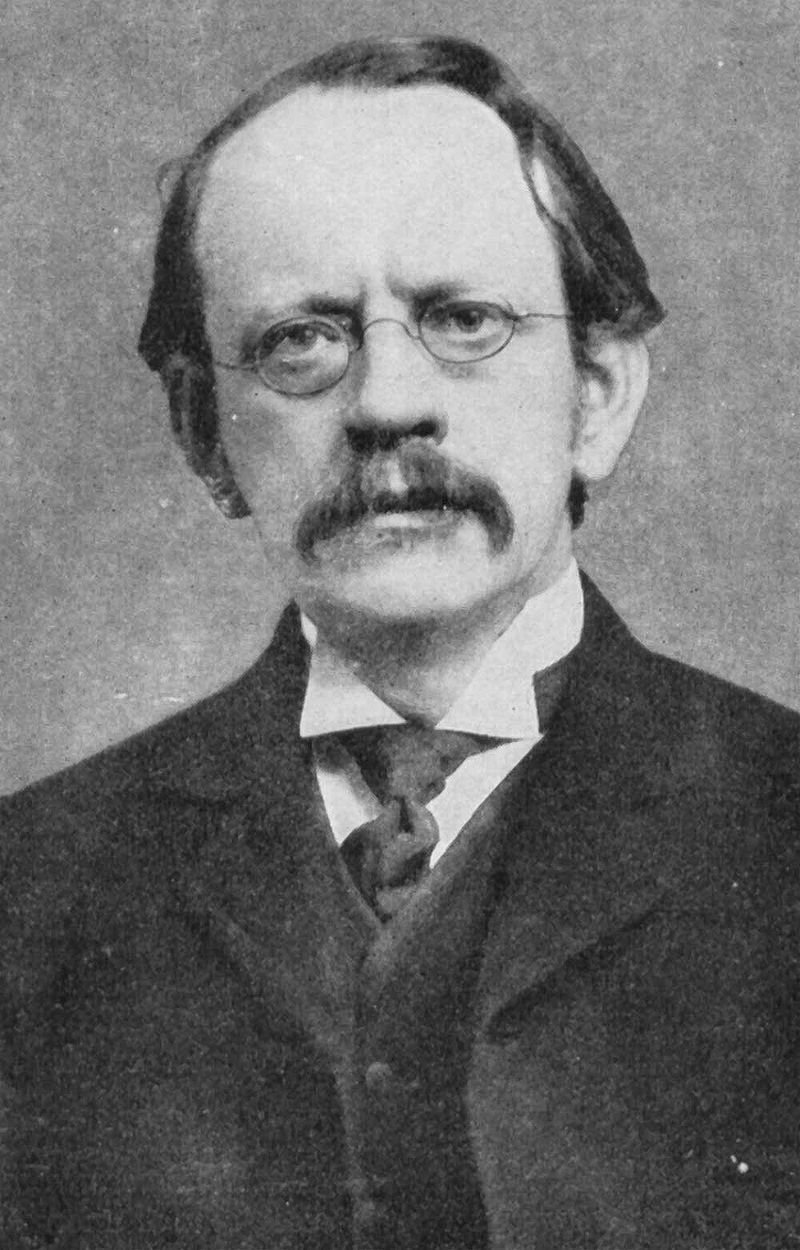
Thomson was a great physicist whose research in cathode rays resulted in the discovery of the electron. The idea that electricity is transmitted by a tiny particle related to the atom was first forwarded in the 1830s. In the 1890s, Thomson managed to estimate its magnitude by performing experiments with charged particles and gases. In 1897, he showed that cathode rays (radiation emitted when a voltage is applied between two metal plates inside a glass tube filled with low-pressure gas) consist of particles called electrons that conduct electricity. Thomson also concluded that electrons are part of atoms.
Thomson received the Nobel Prize in Physics for his work on the conduction of electricity in gases. To a large extent, it was Thomson who made atomic physics a modern science. One of Thomson’s greatest contributions to modern science was in his role as a highly gifted teacher. One of his students was Ernest Rutherford, who later succeeded him as Cavendish Professor of Physics.
Max Planck
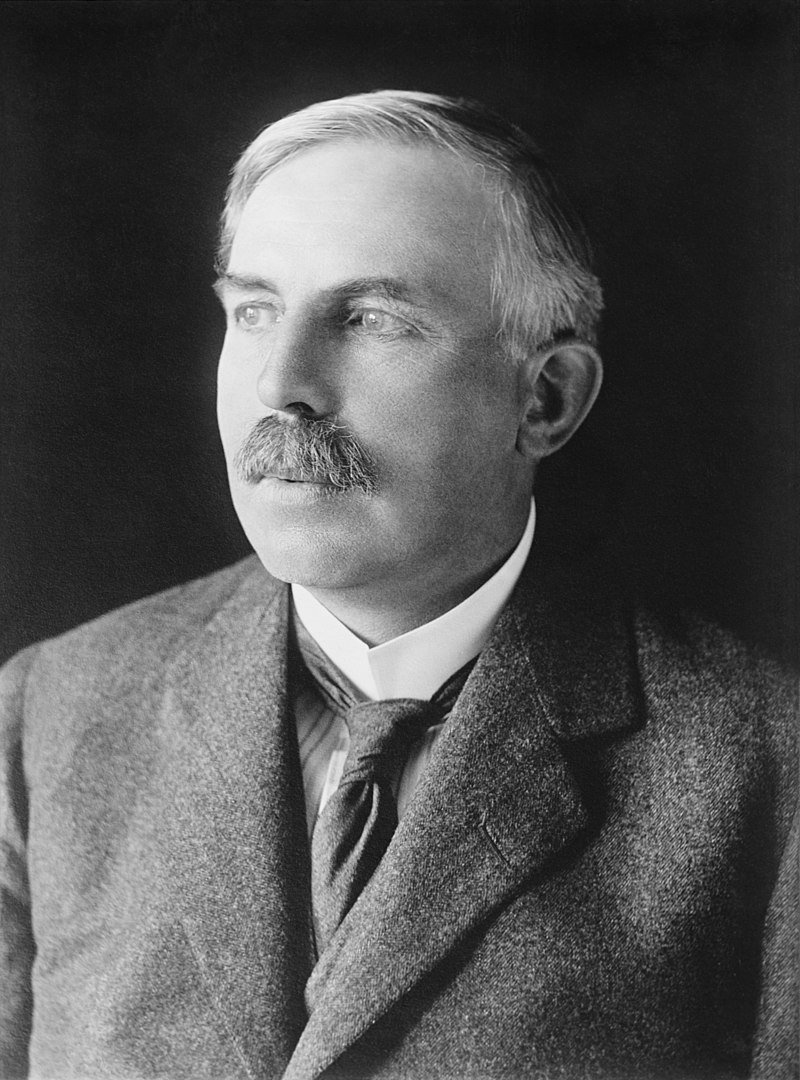
Max Planck is credited with the birth of quantum theory, which won him the Nobel Prize for Physics in 1918. Planck made many contributions to theoretical physics, but his fame rests primarily on his role as originator of the quantum theory.
There are two theories that modern physics uses to explain the universe: relativity (Einstein’s work) and quantum theory (invented by Planck). This theory revolutionized our understanding of atomic and subatomic processes, just as Einstein’s theory of relativity revolutionized our understanding of space and time. Together they constitute the fundamental theories of 20th century physics.
The Munich physics professor Philipp von Jolly advised Planck against going into physics, saying “in this field, almost everything is already discovered and all that remains is to fill a few holes.” Planck replied that he did not wish to discover new things but only to understand the known fundamentals of the field, and so began his studies in 1874 at the University of Munich.
Planck helped popularize the term “theory” to describe Einstein’s relativity work. In a 1906 talk, he referred to the model of physics put forth by Einstein as “relativity theory.” Einstein himself referred to it as the “relativity principle,” but Planck’s terminology caught on.
Marie Curie
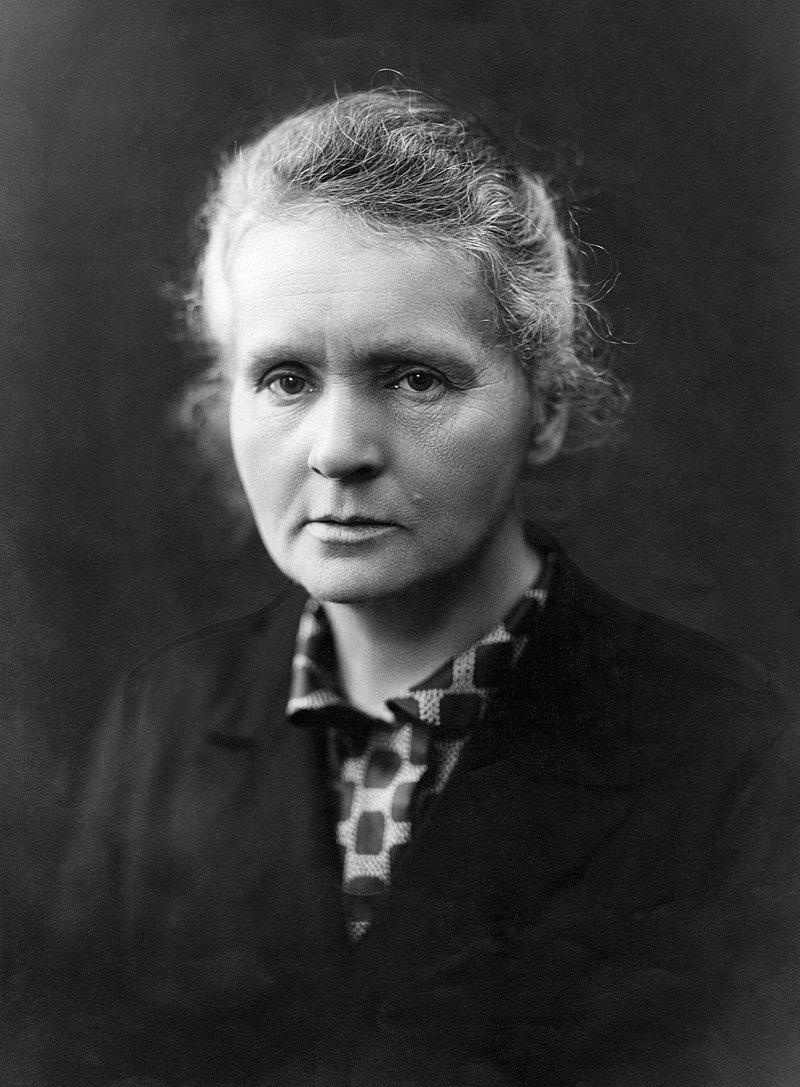
Marie Curie was the first woman to win a Nobel Prize and the first person to win two separate Nobels. Curie was born in Poland and won her first Nobel in 1903 with her husband Pierre for discovering radioactivity. However, she was not allowed to participate in the keynote lecture winners gave because she was a woman.
Marie and Pierre Curie examined many substances and minerals for signs of radioactivity. They found that pitchblende, a mineral, was more radioactive than uranium and figured out that it must contain other radioactive substances. From pitchblende they managed to extract two previously unknown elements: polonium and radium, both more radioactive than uranium.
After Pierre died in a road accident in 1906, she won her second Nobel in 1911 for isolating radium, though an attempt was made to take away this prize when news emerged of her affair with married colleague Paul Langevin. After collecting the prize, Curie was criticized by the French press while Langevin was ignored.
Ernest Rutherford
New Zealand-born Rutherford is considered one of the greatest of all experimental physicists. He discovered the idea of radioactive half-life and showed that radioactivity involved the transmutation of one chemical element to another. He was awarded a Nobel in 1908 for his investigations into the disintegration of the elements.
The discovery of radioactivity in 1896 led to a series of more in-depth investigations. In 1899, Rutherford demonstrated that there were at least two distinct types of radiation: alpha radiation and beta radiation. He discovered that radioactive materials produced gases. Working with Frederick Soddy, Rutherford advanced the hypothesis that helium gas could be formed from radioactive substances. In 1902, they came up with a revolutionary theory that elements can break down and transform into other elements.
Rutherford later became director of the Cavendish Laboratory at Cambridge University, where under his leadership the neutron was discovered by James Chadwick in 1932 and the first experiment to split the nucleus was carried out by John Cockcroft and Ernest Walton. The element rutherfordium was named after him in 1997. He is featured on New Zealand’s $100 note with the Nobel Prize medal he won in 1908.
Albert Einstein
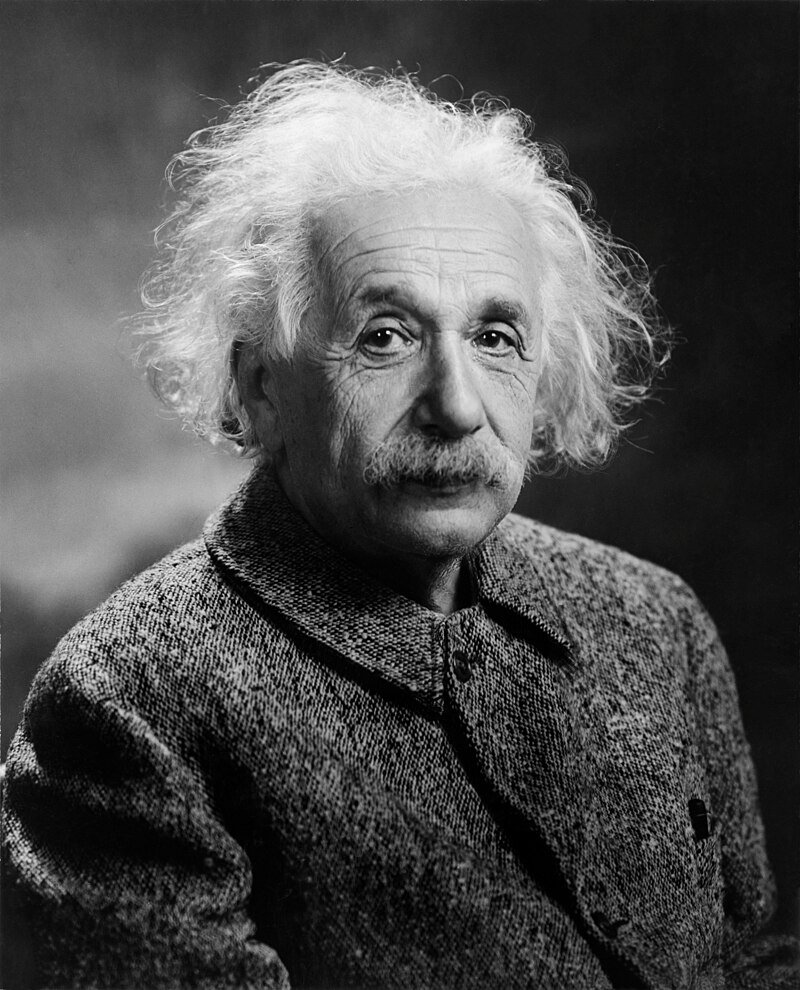
Three great theories define our physical knowledge of the universe: relativity, quantum mechanics, and gravitation. The first is the handiwork of German-born Albert Einstein, who remains the physicist with the greatest reputation for originality of thought.
After university, Einstein was rejected from every academic position he applied for. While Einstein did not invent the concept of spacetime (which was first proposed by German mathematician Hermann Minkowski), his special theory of relativity showed that space and time grow and shrink relative to one another in order to keep the speed of light constant for the observer. Based on his theory, when we travel through space, time moves a tiny bit slower. At incredible speeds like the speed of light, time stands still.
Einstein, who took US citizenship in 1940, also provided the world with its most famous equation: E = mc², which demonstrates the equivalence of mass and energy. Einstein figured out that matter, the tiny particles that make up everything in the world, can be turned into energy. This amazing breakthrough made the 26-year-old a star. 1905 came to be known as Einstein’s year of miracles because he published four groundbreaking papers in just 12 months. His name has become synonymous with the idea of genius. He was awarded the 1921 Nobel Prize for Physics and died a celebrity.
Niels Bohr
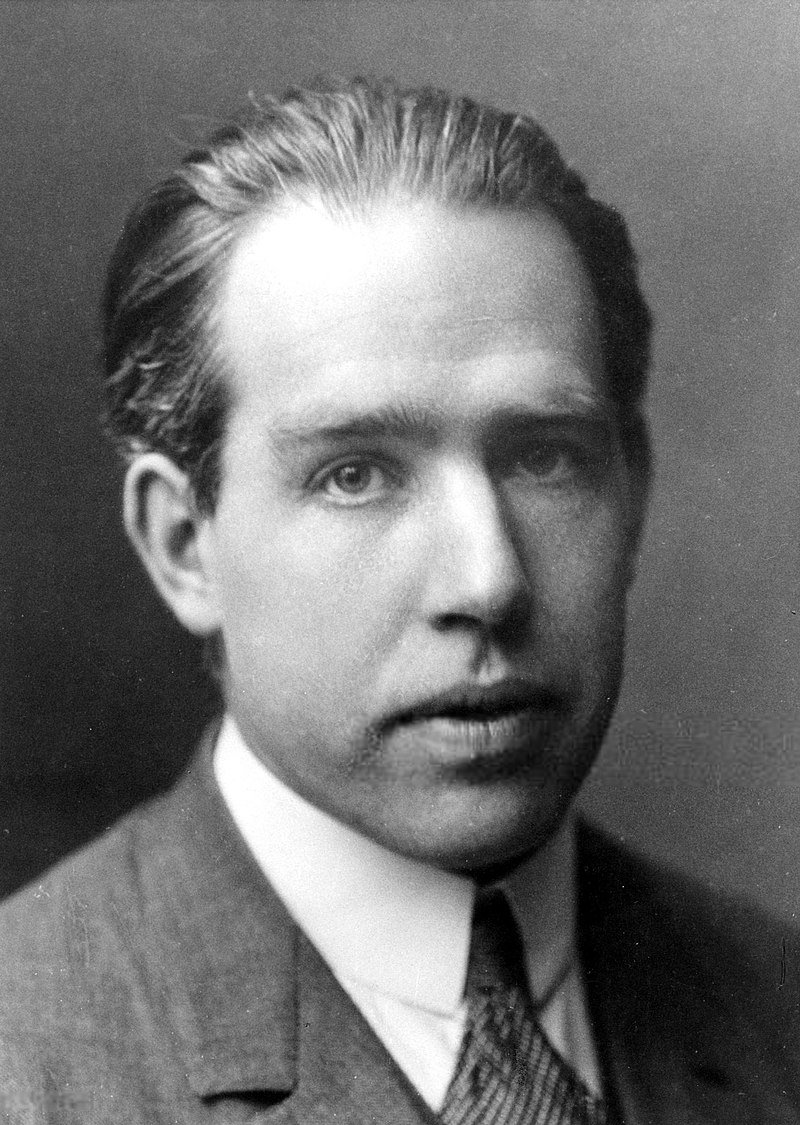
Born in Copenhagen, Bohr developed the modern idea of an atom, which has a nucleus at the center with electrons revolving around it. When electrons move from one energy level to another, they emit discrete quanta of energy. This work won Bohr a Nobel Prize in 1922.
He decided to stop the study of philosophy and mathematics and change to physics. For his achievements, the Carlsberg Brewery gave Bohr a special gift: a house with a pipeline connected to its brewery next door, providing him with free beer for life. In 1954, Bohr helped establish CERN, the European particle physics facility. In 1975, his son Aage won a Nobel for research on atomic nuclei.
Paul Dirac
One of the most revered and strangest figures in physics, the son of a Swiss father and English mother, Dirac was born in Bristol. In 1925, scientists were proposing quantum theories about how electrons in atoms behave when they absorb or emit energy. These theories were based on quantum theory, but they needed to be adjusted to fit with Einstein’s theory of relativity.
In 1928, Dirac formulated a quantum theory that fully accounted for relativity. His equation provided solutions suggesting the existence of a particle similar to the electron but with a positive charge. This particle, known as the positron, was later confirmed by experiments. He predicted the existence of antimatter, created some of quantum mechanics’ key equations, and laid the foundations for today’s microelectronics industry. His monumental work, The Principles of Quantum Mechanics, was immediately considered an excellent resource for physicists and is still used as a textbook today.
Dirac won a Nobel in 1933 alongside fellow physicist Erwin Schrödinger but remained an “Edwardian geek,” according to biographer Graham Farmelo. He turned down a knighthood because he did not want people using his first name, while his daughter Monica never once remembered him laughing. “This balancing on the dizzying path between genius and madness is awful,” Einstein said of him.
Richard Feynman
One of the 20th century’s most influential and colorful physicists, Feynman played a key role in the development of quantum electrodynamics, the theory that describes how light and matter interact, earning him a Nobel Prize in 1965.
After the theory of relativity and quantum mechanics were figured out, scientists developed a theory to describe how charged particles interact with electromagnetic fields. This theory needed some adjustments. In 1948, Feynman made a big contribution by inventing Feynman diagrams. These diagrams show different ways particles can interact with each other and make it easier to calculate the probability of these interactions happening.
Feynman also contributed to the fields of quantum computing and nanotechnology and was a member of the Rogers Commission that lambasted NASA over the destruction of the Space Shuttle Challenger in 1986. At the age of 15, Feynman taught himself trigonometry, advanced algebra, infinite series, analytic geometry, and both differential and integral calculus. He was a keen drummer, experimented with drugs, and often worked on physics problems in topless bars because he said they helped him concentrate.
Further reading:
- The Nobel Prize website provides detailed biographies and lecture transcripts for each laureate (Nobel Prize)
- The MacTutor History of Mathematics Archive covers the mathematical contributions of many physicists (University of St Andrews)
- Abraham Pais’s Subtle Is the Lord: The Science and the Life of Albert Einstein is the definitive scientific biography of Einstein (Oxford University Press)
Leave a Reply