

Non-Euclidean Geometry
For more than two millennia, Euclidean geometry stood as an unquestioned paradigm of physical space. Its fifth postulate, the parallel postulate, stated that through a point outside a given line, only one parallel line could be drawn. This axiom proved particularly problematic, as unlike the others, it did not seem evident or intuitively provable. In attempting to derive it from the remaining axioms, a mathematical revolution was unintentionally sparked.
In the early 19th century, mathematicians such as Nikolai Lobachevsky and János Bolyai independently embarked on what appeared to be a purely formal pursuit: deriving the fifth postulate as a theorem. Instead of achieving their goal, they discovered that by rejecting the postulate while preserving the others, a logically consistent yet radically different geometry emerged. This gave rise to hyperbolic geometry, a non-Euclidean form in which multiple parallel lines can pass through a point external to a given line.
This discovery was not initially welcomed. The idea of multiple parallels seemed absurd compared to physical experience. However, over time, particularly with Einstein’s development of general relativity in the 20th century, it became clear that these geometries were not mere logical curiosities, but valid descriptions of the structure of spacetime. The mistake was assuming that Euclid’s postulate was necessarily true. Questioning it opened the door to a new understanding of the universe and to a profoundly enriched geometric framework.
Napier’s Logarithms
In the 17th century, calculating large products and quotients was a tedious and error-prone task, especially in fields like astronomy, which required thousands of numerical operations. John Napier, a Scottish mathematician, was simply trying to speed up these routine processes. His goal was not to transform mathematics, but to reduce manual labor. This practical motivation became fertile ground for the unexpected emergence of one of the most influential tools in mathematical history: logarithms.
Napier discovered that products could be transformed into sums, and divisions into subtractions, through the introduction of what he called logarithms. The fundamental relationship he identified was log(ab) = log(a) + log(b). This principle greatly simplified calculations, and its application was immediate and revolutionary. Logarithms, along with the tables Napier developed, were quickly adopted by navigators, astronomers, and physicists, allowing them to tackle previously intractable problems with newfound computational efficiency.
It is important to note that Napier did not work with base e, nor did he understand the logarithmic function from a modern analytical perspective. His logarithms were geometric constructions based on ratios between arithmetic and geometric progressions. Even so, his invention laid the groundwork for later mathematicians like Jacob Bernoulli and Leonhard Euler to formalize the concept of natural logarithms and connect them to infinitesimal calculus.
Fourier’s Mistake About Heat
In the late 18th century, Joseph Fourier set out to understand how heat flows through solid bodies. His initial motivation was not to develop a new mathematical theory, but to solve thermal conduction problems relevant to engineering and applied physics. However, this pursuit led him to propose that heat propagation could be described as an infinite superposition of sinusoidal waves—an idea that was met with skepticism at the time.
Fourier suggested that any periodic function, no matter how discontinuous or irregular, could be represented as a sum of sine and cosine functions. This claim, which forms the basis of what is now known as the Fourier series, appeared to contradict classical conceptions of analysis, which had restricted such tools to continuous and differentiable functions. Despite criticism, Fourier stood by his approach, supported by empirical results from heat conduction experiments.
The differential equation he introduced, known as the heat equation, took the following form, where u represents the temperature at a point x and time t, and α is the thermal diffusivity of the material. The general solution to this equation, expressed through trigonometric series, was controversial because of its analytical implications.
Paradoxically, his apparent conceptual error in modeling thermal phenomena with wave-based tools opened the way to a new branch of functional analysis. Today, Fourier transforms are fundamental not only in pure mathematics, but also in quantum physics, signal processing, and statistics.
Newton and Calculus
In the 17th century, Isaac Newton was tackling problems related to the motion of celestial bodies and the variation of physical quantities over time. To address them, he developed a mathematical tool he called the method of fluxions—an early formulation of differential calculus. Although his motivation was purely physical, the need to express velocity, acceleration, and areas under curves led him to the creation of a profound mathematical theory.
At the core of his approach was the concept of instantaneous change. If a quantity varied with time, Newton introduced a fluxion to denote its rate of change. Thus, if x is a quantity that varies over time, its fluxion was written as ẋ, equivalent to the derivative of x with respect to t. In parallel, he developed integration techniques, which he referred to as the method of quadratures, to find areas under curves—anticipating the fundamental theorem of calculus.
However, Newton did not publish his findings immediately. It was Leibniz, working independently, who published his own notations and methods first, leading to a historical dispute over the authorship of calculus. Though their approaches were different—Leibniz with his dx and dy notation, Newton with his fluxions—both built a theory that became essential to modern physics and mathematics.
Despite the controversy, the development of calculus marked a turning point in modeling the physical world. From Newtonian mechanics to modern statistics, the derivative and the integral became the universal language of change and accumulation.
Euler and the Constant e from Finance
Leonhard Euler, one of the most prolific mathematicians in history, found in financial analysis an unexpected context to consolidate one of the most fundamental numbers in mathematics: the constant e. Although today its role in calculus and analysis is widely recognized, the emergence of e originated in the study of compound interest, an economically significant issue in the 18th century.
The central problem was simple: what happens if interest is not compounded annually, but at increasingly smaller intervals? The mathematical expression for the amount accumulated with continuously compounded interest involves the following variables: A is the final amount (principal plus interest), P is the principal (initial amount invested or borrowed), r is the annual interest rate, n is the compounding frequency (how many times per year interest is added), and t is the time.
As n approaches infinity, the formula converges to A = P·ert, where e ≈ 2.71828 is the limit of (1 + 1/n)n as n tends to infinity. This limit, which describes continuous growth, was first identified in this financial context before Euler transformed it into a cornerstone of mathematical analysis.
Euler not only formalized the number e but also explored its algebraic properties and its role in exponential and logarithmic functions. He established that the exponential function ex is its own derivative—a unique property linking e to differential calculus. He also introduced the famous identity known as Euler’s formula, connecting e to trigonometry and complex numbers.
What began as a practical study of financial accumulation became a central concept in the mathematics of growth, analysis, and modeling of natural processes.
Henri Poincaré and Chaos Theory
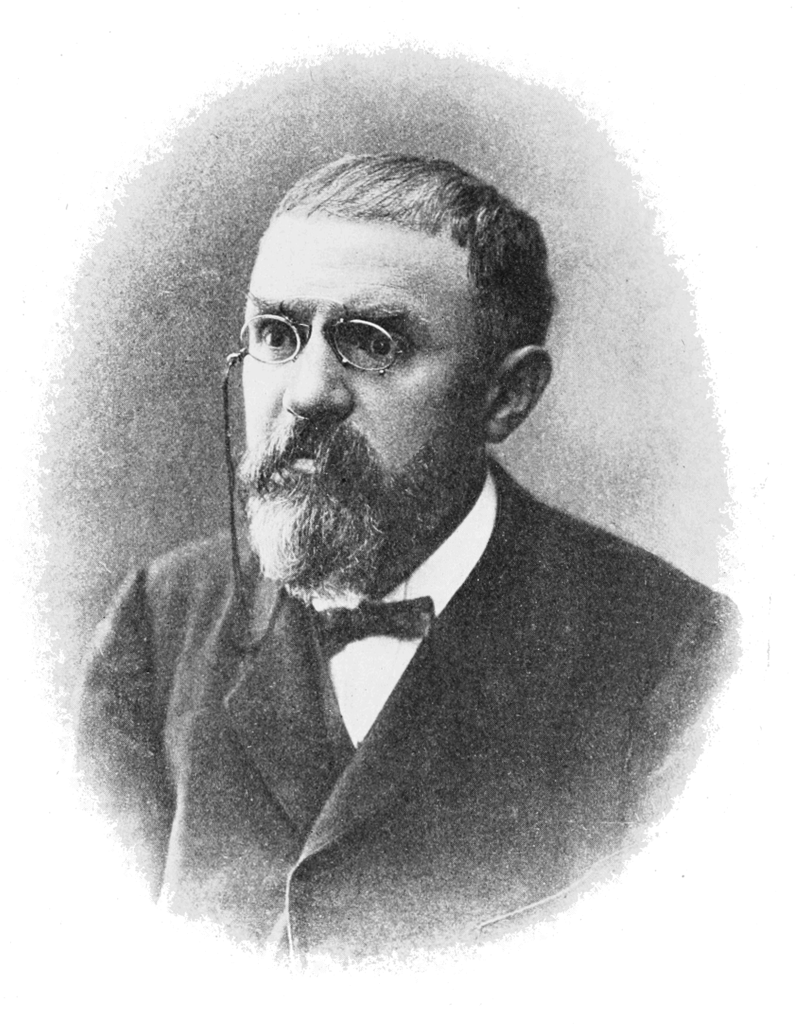
Henri Poincaré, considered one of the fathers of topology and the qualitative theory of dynamical systems, introduced in the 19th century a new way of understanding the behavior of complex deterministic systems. His study of the three-body problem, which describes the gravitational interaction among three masses, revealed a deep sensitivity to initial conditions, anticipating what would later be called chaos theory.
Until then, it was assumed that with sufficient information, any physical system could be predicted with unlimited precision. However, by analyzing the motion of three gravitationally interacting bodies, Poincaré discovered that small changes in initial values could lead to completely different trajectories. This phenomenon, far from being an anomaly, was inherent to the mathematical structure of certain nonlinear systems.
Poincaré introduced key conceptual tools, such as Poincaré sections and attractors, to visualize the long-term behavior of these systems. Although he did not use the term “chaos,” he laid the foundation for understanding that even deterministic systems could exhibit unpredictable, highly complex, and seemingly random behavior.
His work was overlooked for decades. But in the 20th century, with the advent of computers, his ideas gained new relevance and were applied in meteorology, biology, economics, and many other fields. The conceptual revolution Poincaré initiated demonstrated that the boundary between order and chaos is not a clear dividing line, but a dynamic continuum that continues to redefine the limits of scientific knowledge.
Gauss and the Normal Curve
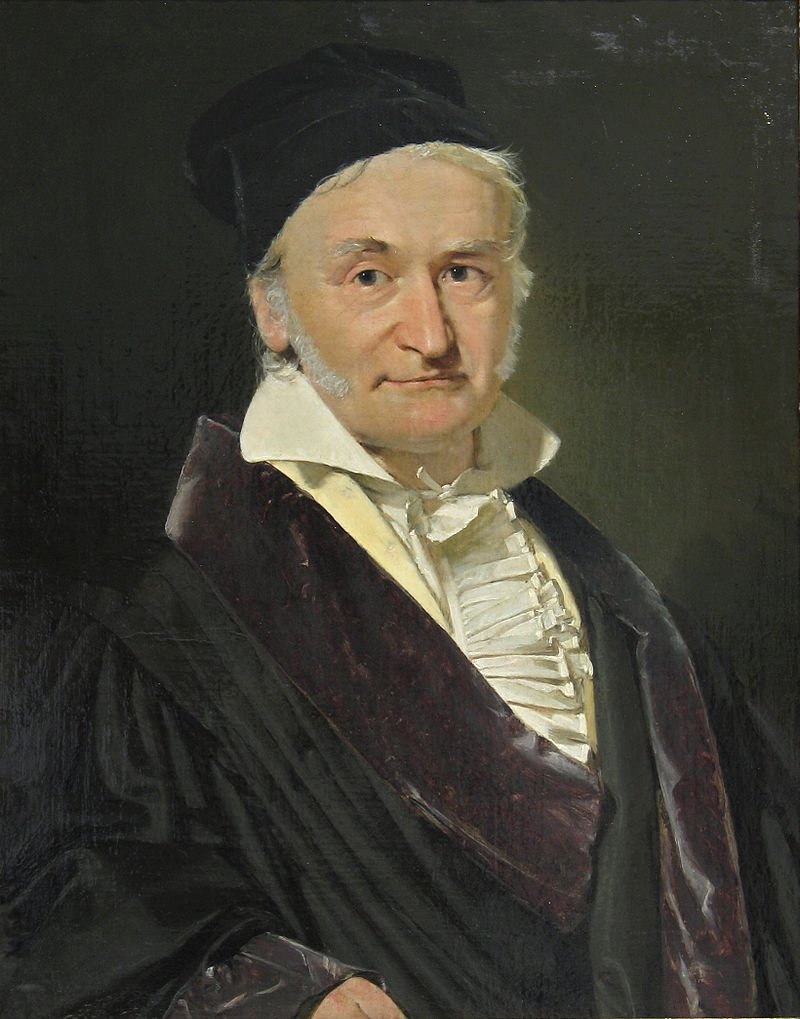
In the first half of the 19th century, Carl Friedrich Gauss analyzed the distribution of errors in astronomy and geodesy, identifying that the pattern of those errors followed a distinctive shape, which we now refer to as the Gaussian or bell curve. This curve is described by a function where X is the continuous random variable, μ is the mean of the distribution, and σ is the standard deviation.
Gauss demonstrated that many natural and social phenomena could be modeled using the same mathematical structure. He did not invent the formula in isolation. Rather, his work was built on the understanding that individual errors are small variations, and their sum tends to follow a normal distribution under appropriate conditions.
The normal curve became not only a statistical tool, but also a foundation for error theory, statistical inference, and later modern probability theory. When the generating function of the normal distribution is established and real-world data are shown to fit it, a deep regularity emerges from what once appeared to be experimental chaos.
This discovery revealed that behind dispersion and variability lies a universal mathematical elegance. When many variables combine, even if each one is uncertain, they tend to form a predictable pattern. In short, what began as a practical need to measure the earth and the heavens turned into a gateway to understanding randomness, variability, and the hidden structure within the seemingly chaotic.
This article was generated from the video transcript of “The Greatest Accidental Math Breakthroughs”.
Watch the full video above for visual explanations and diagrams.
Leave a Reply