
The Imaginary Unit (i)
Overview
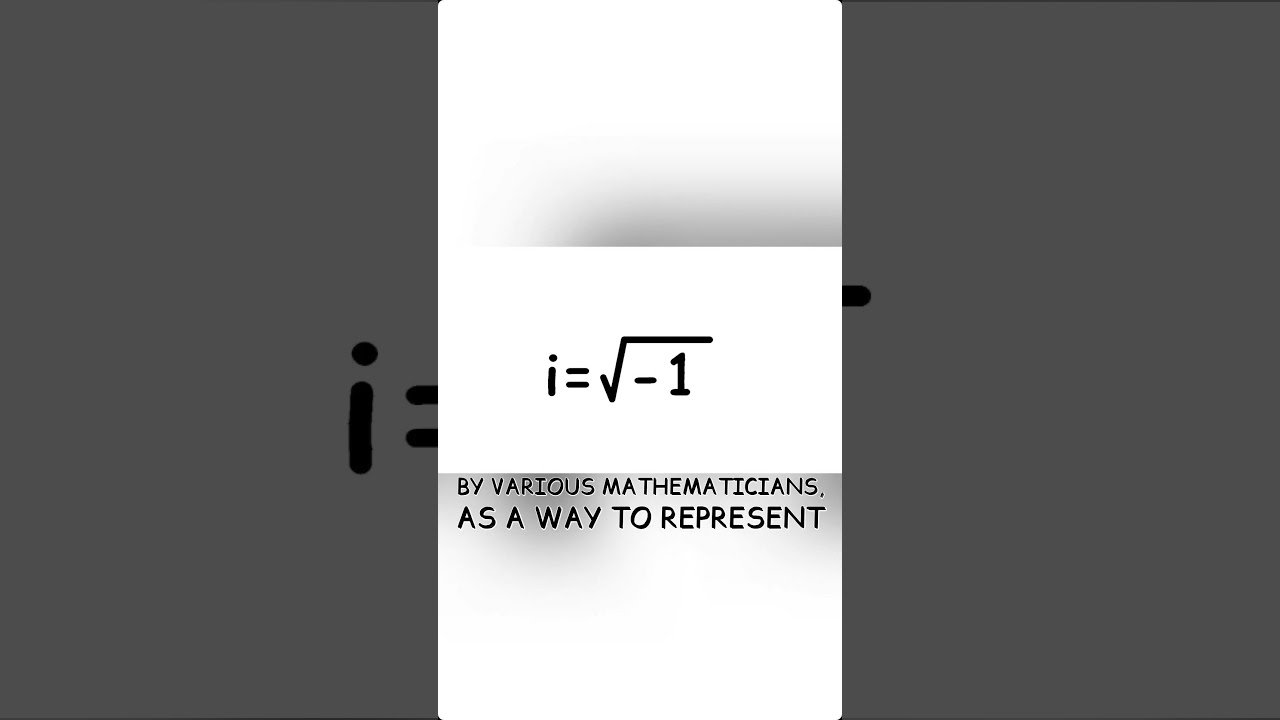
The imaginary unit i is defined by the rule i² = −1. It was introduced to solve equations that have no real number solutions.
Definition and History
The imaginary unit, denoted by the symbol i, is a mathematical constant representing √(−1). The concept of the imaginary unit was developed over time by various mathematicians as a way to represent and work with square roots of negative numbers.
Significance
It is a foundation of complex number theory, which is essential for many areas of mathematics, physics, and engineering, such as electrical engineering and quantum mechanics.
This article was generated from the video transcript of “The Imaginary Unit i Explained in 30 Seconds”.
Watch the full video above for visual explanations and diagrams.
Leave a Reply