
The fourth dimension arises by adding time to the three spatial dimensions. In 1905, Albert Einstein formulated the special theory of relativity and proposed that time should not be treated as an external parameter but as a dimension intertwined with space.
Minkowski’s Spacetime
Hermann Minkowski gave mathematical form to this idea through the concept of spacetime, a four-dimensional continuum in which each event is represented as a vector (x, y, z, ct), where ct indicates the temporal coordinate expressed in units of length by multiplying time t by the speed of light c.
The Light Cone
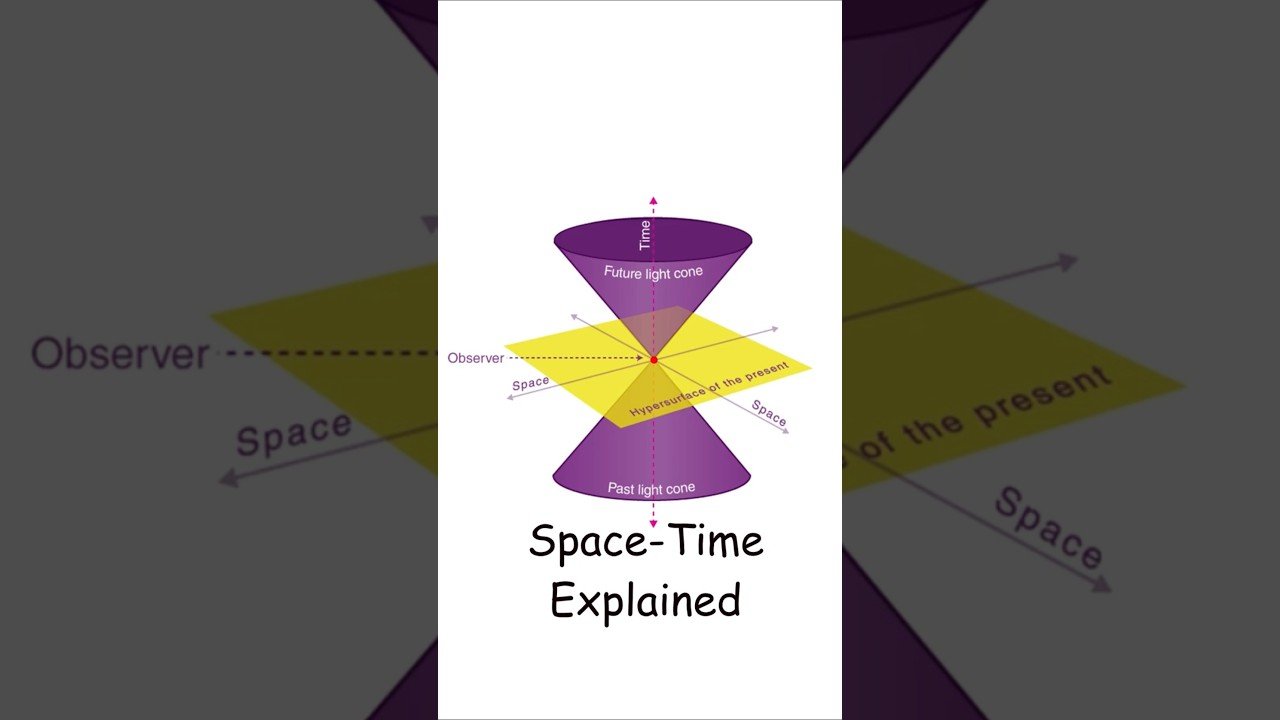
This interval can be represented graphically through the light cone, where the vertical axis corresponds to time and the horizontal axis to space. The upper cone delimits the events that can occur in the observer’s future, while the lower cone represents the events of their past. Everything that lies outside these cones is spatially separated and cannot be causally connected without exceeding the speed of light.
A New Kind of Geometry
Unlike Euclidean geometry, the spacetime interval can be positive, negative, or zero, reflecting the causal structure of the universe.
Why Does This Matter?
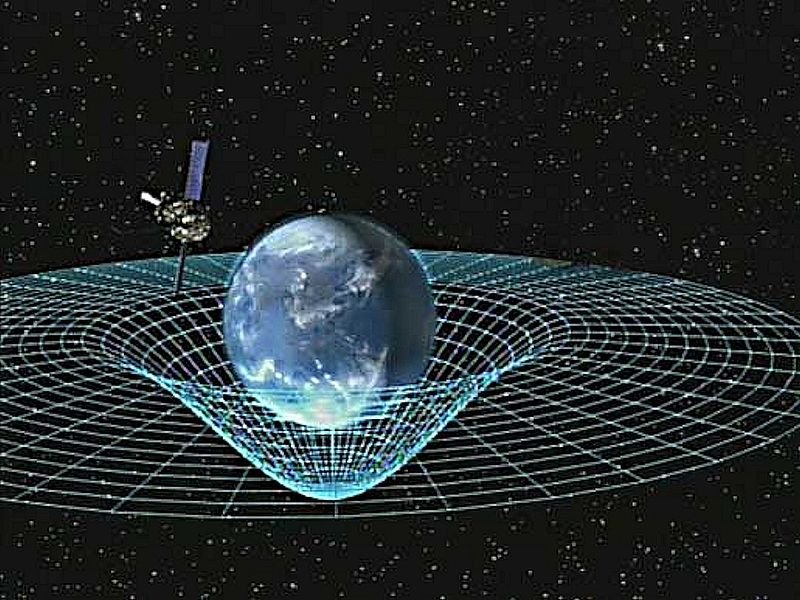
Minkowski’s framework was not just a mathematical convenience. It fundamentally changed how physicists understand reality. Before special relativity, space and time were considered entirely separate entities. Minkowski showed that they are inseparable, famously declaring that “henceforth space by itself, and time by itself, are doomed to fade away into mere shadows.” This four-dimensional picture became the foundation on which Einstein later built general relativity, where spacetime is not just a static stage but a dynamic fabric that curves in response to mass and energy. GPS satellites, particle accelerators, and our understanding of black holes all depend on treating the universe as a four-dimensional spacetime continuum rather than three dimensions of space with time running separately in the background.
Leave a Reply