
Counting
Counting is a method of finding what number of something you have. The number zero indicates that you have nothing. After that, the first few counting numbers are 1, 2, 3, 4, 5, 6, 7, 8, 9, and 10. Ten 10s make 100, ten 100s make a thousand, a thousand thousands make a million, and a thousand millions make a billion. These go on forever without end. The concept of endlessness is called infinity.
Addition
Addition is a basic arithmetic operation involving the combination of two quantities, called addends or terms, into a result called a sum. For example, if you have three apples and you add two apples, you have five apples. 3 + 2 = 5.
Addition is commutative, so changing the order of the terms doesn’t affect the sum. 3 + 2 and 2 + 3 are both equal to 5. It is associative, so if you have a sequence of multiple additions, changing the order in which you do them doesn’t affect the sum. 1 + (2 + 3) and (1 + 2) + 3 are both equal to 6. Anything plus 0 is itself, so zero is called the additive identity.
Subtraction
Subtraction is an arithmetic operation involving taking one quantity (the subtrahend) from another (the minuend). The result is called the difference between the two quantities. For example, if you have five apples and you take away two apples, you’re left with three apples. 5 − 2 = 3.
Subtraction is the inverse of addition. Unlike addition, it is neither commutative nor associative. Any number minus itself is zero, and a number minus a larger number equals a negative number, a number less than zero. This is as opposed to positive numbers, the numbers greater than zero. Every positive number has a negative version, obtained by doing zero minus that number. If you take the counting numbers, their negative versions, and zero, you get a set of numbers called the integers.
Multiplication
Multiplication is the third basic arithmetic operation, defined as iterated addition. One number (the multiplier) tells you how many times to add another number (the multiplicand). These two numbers are called factors, and the result is called a product. For example, if you have three baskets and each basket has two apples, then you have six apples. 3 × 2 = 6.
Like addition, multiplication is both commutative and associative. Any number multiplied by 0 is 0. Any number multiplied by 1 is itself, so 1 is called the multiplicative identity.
Division
Division is the fourth and final basic arithmetic operation. It tells you how many times one number (the divisor) goes into another number (the dividend). The result is called a quotient or ratio. If you have eight apples and you want to give them equally to two friends, then each friend gets four apples. 8 / 2 = 4.
Division is neither commutative nor associative. A whole number divided by a whole number does not always result in a whole number. This gives rise to the rational numbers, which are the numbers that can be expressed as the quotient of two integers. Division by zero is a special case. It is undefined, meaning there is no definition for what it means, so it does not actually give a result.
Equations
An equation is a statement that two expressions have the same value. For example, 2 + 2 = 4 is an equation. Equations have three basic properties. The reflexive property says anything is equal to itself (for example, 7 = 7). The symmetric property says if something equals something else, then the second thing equals the first thing (for example, if 2 + 2 = 4, then 4 = 2 + 2). The transitive property says if something equals a second thing and that second thing equals a third thing, then the first thing equals the third thing (for example, if 4 + 3 = 7 and 7 = 9 − 2, then 4 + 3 = 9 − 2).
Basic Geometry
Geometry is all about shapes. Shapes are made out of points, which can be seen as dots. Shapes can have sides, each side being a line segment, a segment of an infinitely stretching line. When two lines come together at a point, they form an angle. A right angle is a quarter of a full turn. If two lines intersect at a right angle, they are called perpendicular.
A shape made of a certain number of sides is called a polygon. Polygons are named based on the number of sides they have. From 3 to 8, the names are triangle, quadrilateral, pentagon, hexagon, heptagon, and octagon. A regular polygon is a polygon with all equal sides and all equal angles.
A circle is a shape containing all the points that are an equal distance from a center point. This distance is called the radius. The distance from one side of the circle to the other side, passing through the center, is called the diameter.
Order of Operations
In an expression, operations must be done in a certain order, going from left to right. Parentheses come first: if parentheses are used, do everything inside first. Exponentiation comes next. Multiplication and division come afterward, with equal precedence. Addition and subtraction come after that, again with equal precedence.
Decimals
Decimals are a way of representing non-whole numbers. This involves using a dot placed after the ones digit, called a decimal point. To the right is the tenths place, where a tenth is 1/10. After that is the hundredths place, the thousandths place, and so on.
Factors
The factors (or divisors) of a number are the numbers that you can evenly divide into the original number. In other words, if you divide a number by a factor of that number, the result will be a whole number. For example, the factors of 6 are 1, 2, 3, and 6 itself. If two numbers share a certain factor, that is called a common factor.
Any whole number greater than 1 can be put into one of two groups: prime numbers and composite numbers. A prime number is a number with exactly two factors, those being 1 and itself. For instance, the only factors of 7 are 1 and 7, so 7 is a prime number. A composite number is a positive whole number with more than two factors. 8 is a composite number because its factors are 1, 2, 4, and 8.
A composite number can be composed from a product of prime numbers. 8 can be expressed as 2 × 2 × 2. Any integer greater than 1 can be expressed as a unique product of prime numbers, either as a prime number itself or by multiplying several prime numbers together. This fact is called the fundamental theorem of arithmetic.
Fractions
A fraction is a way to express the division of one number by another. It uses a symbol called a fraction bar, where the dividend is placed on top and the divisor is placed on the bottom. The top number is called the numerator and the bottom number is called the denominator. A fraction is a way of expressing a non-whole amount. For example, a half is 1/2, two-thirds is 2/3, and a tenth is 1/10.
If a fraction’s numerator is greater than or equal to its denominator, it is called an improper fraction. If you multiply the numerator and denominator of a fraction by the same number, the value of the fraction stays the same. This is also true for dividing the numerator and the denominator by the same number.
Fractions are usually expressed in simplest form, where the numerator and denominator have no common factors other than 1. For example, 2/4 is not in simplest form due to the common factor of 2, but 1/2 is.
To add fractions, the denominators have to be the same. This can be achieved by finding a number that is a multiple of both denominators, called a common multiple, and rewriting the fractions so that this common multiple is the denominator of both. Then the result of adding the fractions is the sum of the numerators over the denominator. Subtracting fractions is similar, but involves taking the difference of the numerators instead.
The product of two fractions is the product of the numerators over the product of the denominators. To divide fractions, keep the first fraction, change the division to a multiplication, and flip the second fraction so that the numerator and denominator switch.
Powers and Radicals
Exponentiation is repeated multiplication. The exponent tells you how many times to multiply the base. For example, 2³ = 2 × 2 × 2 = 8. We say 8 is the third power of 2.
If you have an exponent of zero, that means multiplying zero times. This results in the empty product, the result of multiplying no numbers, which is 1.
Root extraction is a way of finding a base given an exponent and a power. It is denoted with a symbol called a radical. For example, since 8 is the third power of 2, we say 2 is the third root of 8, written as ∛8 = 2.
Data Plots
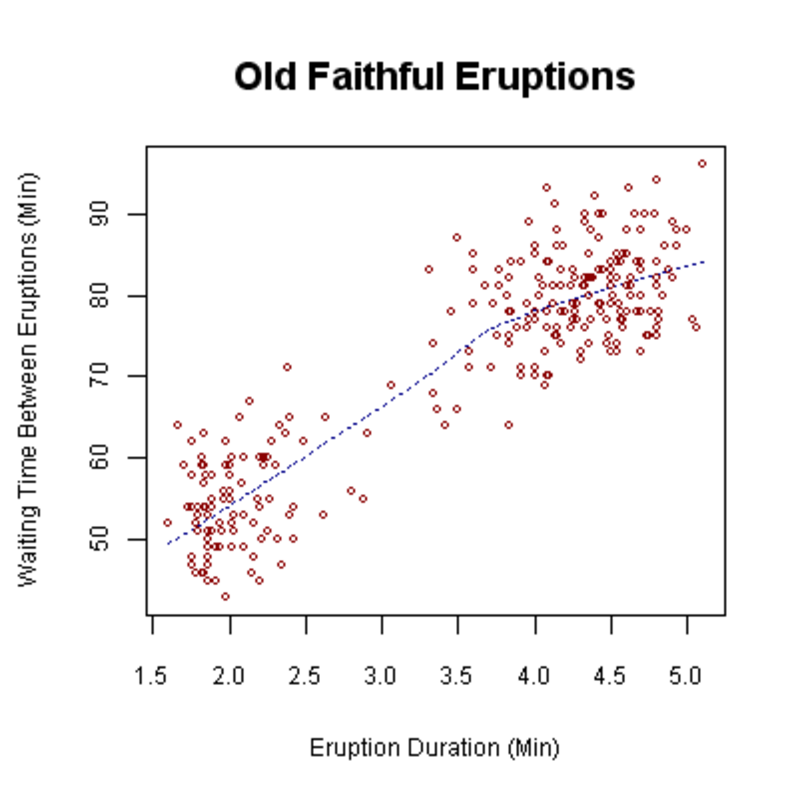
Data is a collection of facts and statistics. This can be visually represented using a plot. Some types of plots include the scatter plot, a two-axis plot where each axis is associated with a variable and pieces of data are represented as points on the plot. The box plot is a way of representing the distribution of single-variable data, showing the minimum, first quartile, median, third quartile, and maximum of the data set. A histogram splits data into certain ranges of values, and the number of values within a given range is represented by the height of a vertical bar.
Variables
A variable is a symbol that represents some unspecified value. Usually a variable is just a single letter. For example, the variable x is commonly used.
Variables can be used in equations. One example of an equation involving a variable is x + 2 = 5. We know that 3 + 2 = 5, so x must be equal to 3. Within a certain equation, every instance of a certain variable must represent the exact same thing. For example, consider the equation x + x = 8. Here both x’s have to be the same number. Since 4 + 4 = 8, we know that in this equation x = 4.
Cartesian Coordinates
A coordinate plane is a two-dimensional space where each point can be described by a list of coordinates. One example of a coordinate system in a plane is Cartesian coordinates. It involves two perpendicular lines called axes, one horizontal and one vertical, that intersect at a point called the origin. The horizontal line is the x-axis and the vertical line is the y-axis. On the x-axis, right is positive and left is negative. On the y-axis, up is positive and down is negative.
A point can be written in Cartesian coordinates as (x, y), where the variables x and y are coordinates and each coordinate represents the distance along each axis. For instance, the point (3, 2) has an x-coordinate of 3 and a y-coordinate of 2. The point (−1, −2) has an x-coordinate of −1 and a y-coordinate of −2.
Functions
A function is a mathematical object that takes in an input and spits out an output. A function is often denoted by a letter, usually the letter f. We write the input of the function in parentheses to the right of the function’s name, and we say that the function evaluated at this input is equal to its output.
For example, suppose that f is the function that takes in a number and spits out two more than that number. f(3) = 3 + 2 = 5, f(4) = 4 + 2 = 6, f(5) = 5 + 2 = 7. We can write a general definition for this function using a variable: f(x) = x + 2.
Additional Context on Number Systems
The topics covered here, from counting through functions, trace a path through the number systems that mathematicians built up over centuries. The counting numbers (1, 2, 3, …) are also called the natural numbers. Adding zero and negative numbers gives us the integers. Allowing division gives us the rationals. And once decimals enter the picture, we’re brushing up against the real numbers, which include irrational numbers like √2 and π that can’t be written as fractions. Each expansion of the number system was motivated by wanting to solve equations that the previous system couldn’t handle. Negative numbers let us solve x + 3 = 1. Fractions let us solve 2x = 5. And irrational numbers let us solve x² = 2. This pattern of expanding number systems to fill gaps continues all the way through advanced mathematics, eventually leading to complex numbers, quaternions, and beyond.
Further Reading
- Natural Numbers on MathWorld
- Fundamental Theorem of Arithmetic on MathWorld
- Cartesian Coordinates on MathWorld
Leave a Reply