
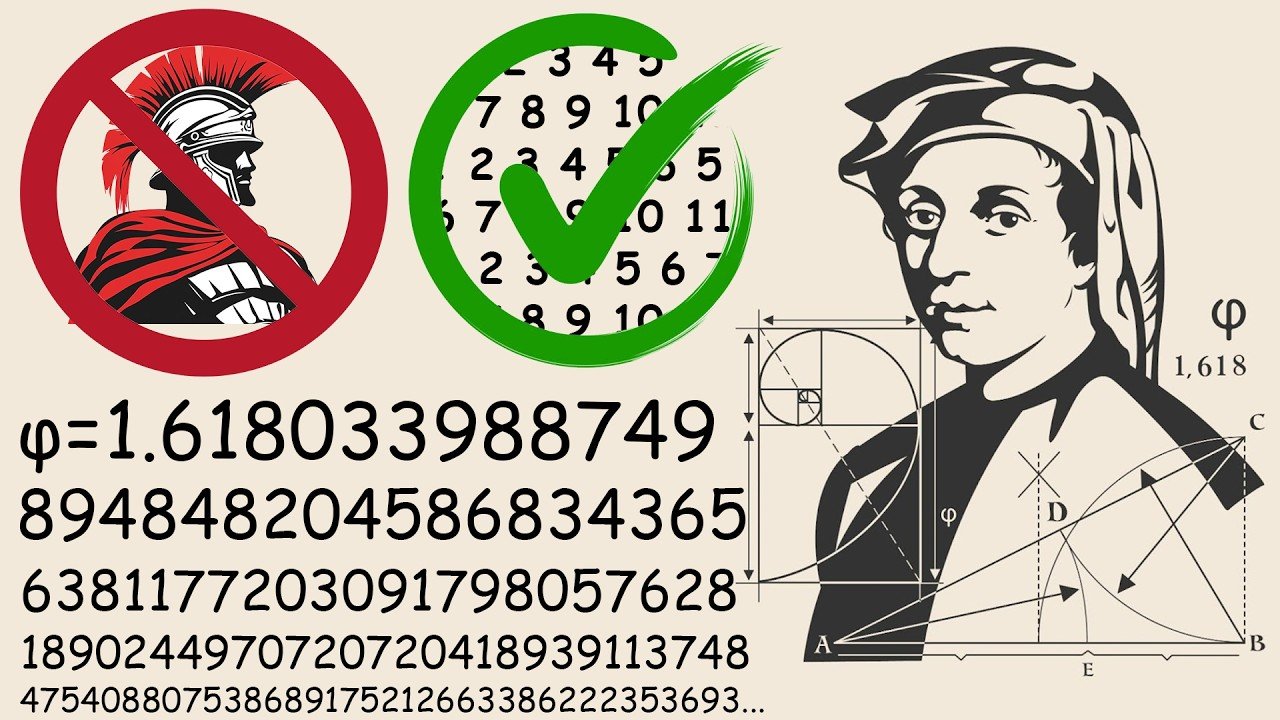
Leonardo de Pisa Fundamentally Changed Math
mathematics is related to Natural Sciences the result of human logic a language that at first glance seems to go unnoticed but if we stop and observe it’s clear that mathematics is present in nature Leonardo of Pisa better known as Fibonacci was an Italian mathematician of the Republic of Pisa and was considered the most talented Western mathematician of the Middle Ages although Leonardo of Pisa is now famous for the much mentioned Fibonacci series he is credited with a more important event Leonardo of Pisa spread the
Discovering the Fibonacci Series
Practical utility of the Hindu Arabic numbering system in Europe as opposed to Roman numbering he introduced the concept of zero and shared what he had learned on his travels with his father gugli bonach a merchant from North Africa it was there that Leonardo studied the Arabic numbering system decimal numbering system positional notation and a zero digit that is zero Fibonacci traveled through the Mediterranean countries to study with the most prominent Arab mathematicians of that time the Fibonacci series dubbed
Ancient Indian Discoveries in Sanskrit Texts
by some more enthusiastic people as the secret code of nature or the Divine sequence appears again and again in natural structures Fibonacci wrote this series of numbers in the year 1202 in his book of calculation Liber abaki where he solved a problem of the reproduction of rabbits the objective was to know how many pairs of rabbits he would have at the end of the year the series begins with the number one Fibonacci as he was developing the series for the mathematical problems of the rabbits he realized that the
The Golden Number (Phi, φ)
following number corresponded to the sum of the two immediately preceding numbers as follows 1 1 2 3 5 6 13 21 and so on this sequence so famous today actually went unnoticed at the time it was only in the 19th century different mathematicians began to study its properties and Marvel at its frequent appearance in nature it was then that it became known as the Fibonacci series but it is necessary to clarify that this series had already become known even before Fibonacci mentioned it history takes us back to the year 450
The Golden Spiral
CE and 200 BCE appearing in the metric book of the Indian mathematician pingala pingala presented the first known description of a binary numbering system in his Sanskrit work Chanda shastra which also contains basic ideas of the Fibonacci sequence and Pascal’s triangle returning to the Fibonacci series it is important to note that although it is represented in various aspects of nature it does not strictly govern it this was mentioned mentioned by mathematician Keith delin a British mathematician and Popular Science writer
From Roman Numerals to Hindu-Arabic Numbers
saying yes it is true that this series appears more frequently in nature but it is not a rule the Fibonacci series is also related to the golden number which is also colloquially known as the Divine proportion due to its connection with nature and Beauty the golden number is defined as 5 = 1 + < TK 5 / 2 = 1.6 18 there is a close link between the golden ratio and the Fibonacci series to calculate it it can be approximated by dividing any number in the Fibonacci series by the immediately preceding
Fascinating Facts About the Fibonacci Sequence
number that is $\frac{1}{1}$ is 1 $\frac{2}{1}$ is 2 $\frac{3}{1}$ is 1.5 $\frac{5}{3}$ is 1 Point repeating 6 and so on getting closer and closer to the irrational value of the golden number 1.618 it is said to be closer because the larger the digits used for division the closer the result will be to the golden number this number is represented by the Greek letter fi it was called number fi in honor of the Greek sculpter fidus due to the nature of every irrational number its decimal digits are infinite like the number pi and Oilers number the golden
ratio in the cultural field has the characteristic of being Pleasant to human Vision the oldest specific moment of the golden number dates back to hippasus of metapontum one of the first followers of Pythagoras he is credited with having discovered and studied irrational numbers among these the golden number later uid known as the father of geometry would present a formal definition of the golden number regarding the golden ratio Keith develin is known for debunking the common misconception that the golden ratio
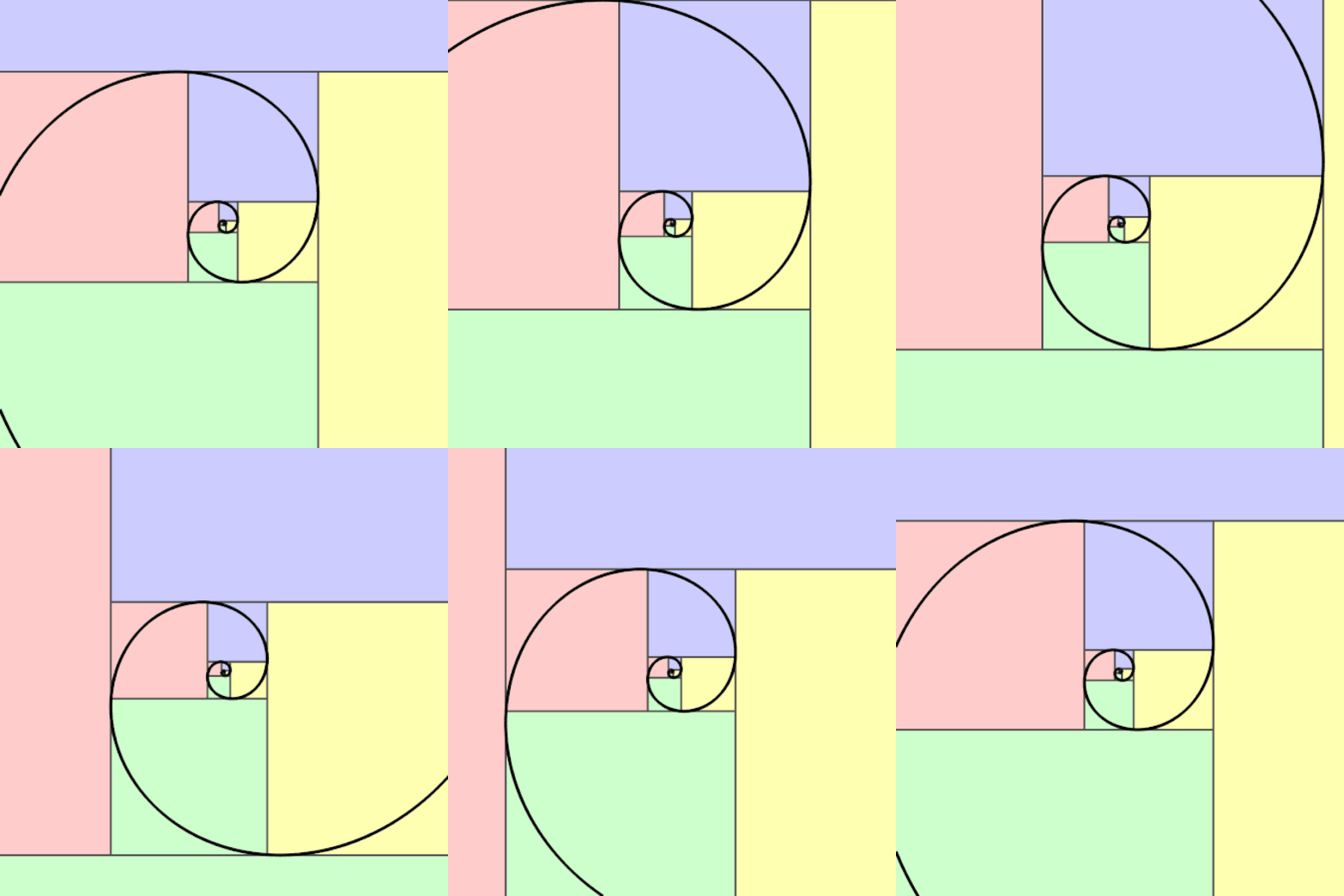
dictates beauty or perfect proportions in nature stating that there’s no evidence that things conforming to this ratio are more beautiful the Fibonacci sequence is the most famous Series in the world of mathematics by observing this mathematical proportion that appears in natural geometric progressions over and over again it is possible to cite several examples with a golden ratio golden spiral by dividing an area into rectangles according to the golden ratio and adding a curve to each rectangle one
can get a better idea of the golden ratio and its relationship to the Fibonacci series this is called the Golden spiral and is one of the most attractive and common shapes in nature nature has found a way to optimize through Evolution you could say that nature uses the golden ratio to optimize resources not only in nature but also in in painting sculpture and architecture the pattern of seeds inside a sunflower head flower petals pineapples the Parthenon notredam Cathedral by Leonardo da Vinci the jonda
St John the Baptist Vitruvian Man human hands the proportion between the fanges of the hands and the metacarpal bone spiral-shaped nautilus shell hurricanes galaxies p scales triangle family tree of bees aloe vera plant snail shell human ear Michelangelo’s David head of the dove although Fibonacci is known for his numerical sequence the great contribution of this Italian mathematician is the popularization of the Hindu Arabic numerical system in Europe most of his book on calculus explains the numbers from 0 to 9 and the
procedure to perform the four basic operations addition subtraction multiplication division but this which is so common today was not so obvious before the 13th century because people in general still use the Roman system Fibonacci was key in spreading modern arithmetic and his true Revolution was to demonstrate that 1 + 1 is 2 interesting facts about the Fibonacci series currently there is a Congress and a magazine about the FIB Fibonacci Sequence the magazine is published by the Fibonacci Association which is of
Canadian origin Fibonacci quarterly here you can find exclusive information related to the Fibonacci series in 1964 mathematician John H E con proved that the number one and the number 12 are the only squares in the Fibonacci series I.E 1 2 = 1 122 = 144 this is quite a striking fact considering that there are infinite numbers in the Fibonacci series Leonardo of Pisa better known as Fibonacci owes his name Fibonacci to his father gelmo Bonacci Leonardo posum received the nickname Fibonacci from filus Bachi
meaning son of Bonacci Fibonacci trading strategies are a method of analyzing and Performing trades based on the Fibonacci sequence the golden ratio is present in musical chords for example in the formal structure of Beethoven’s Fifth Symphony it can also be seen in several Mozart piano sonatas the proportion between the development of the theme and its introduction is the closest to the golden ratio
Leave a Reply