
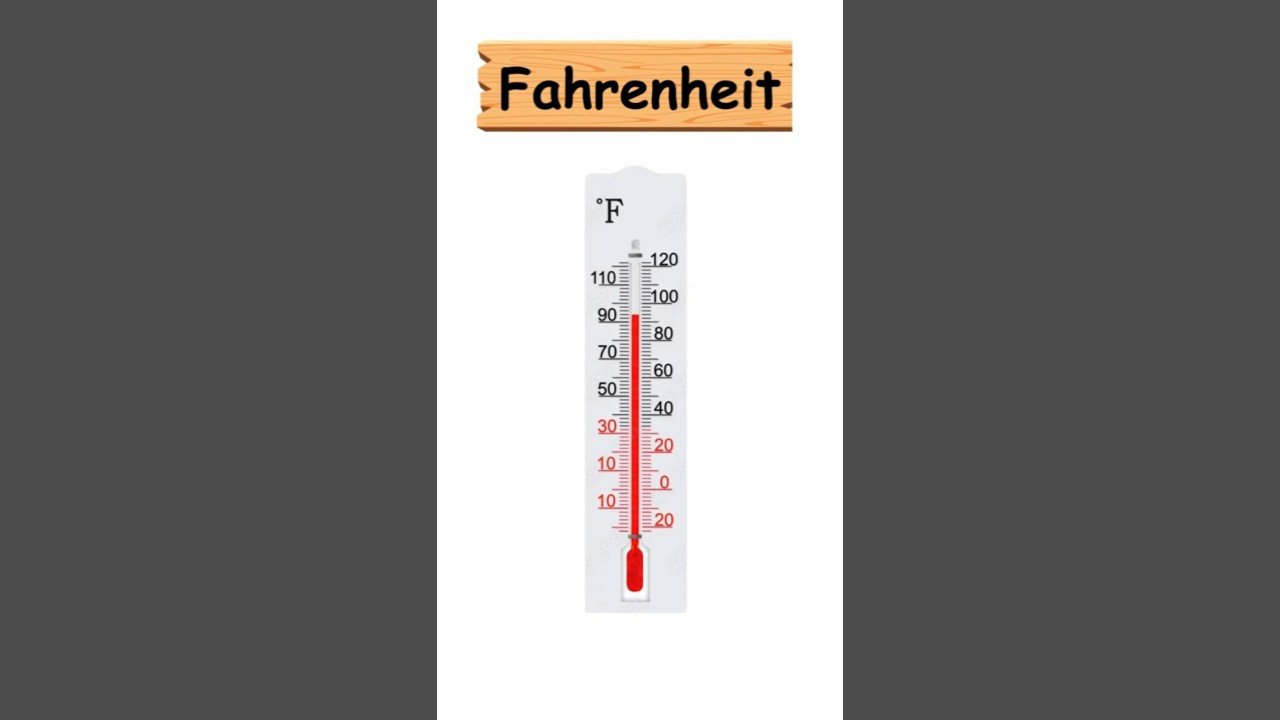
The Fahrenheit scale, with units of degrees Fahrenheit (°F), is likely familiar to those living in the United States of America. Its story begins in 1724 with Polish-Lithuanian physicist and inventor Daniel Gabriel Fahrenheit.
The Original Definition
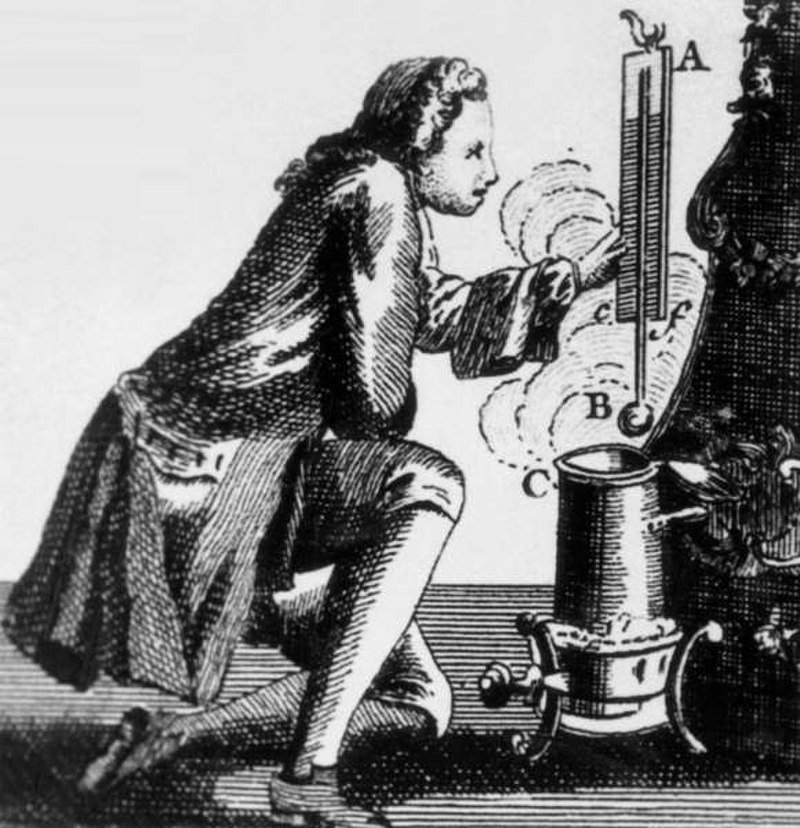
The Fahrenheit scale was initially defined using two fixed points at 0 and 90. Zero was chosen as the stable temperature of a brine made of ice, water, and ammonium chloride. 90 was based on an estimate of average human body temperature.
The Final Revision
The Fahrenheit scale underwent one final major revision. 32°F and 212°F became the freezing and boiling points of water, respectively. This puts the brine’s stable temperature at about 4°F and the average human body temperature at about 98.6°F, a modest difference from Daniel Fahrenheit’s original vision.
Accounting for this gives us these formulas for Celsius-Fahrenheit conversion:
°F = (°C × 9/5) + 32
°C = (°F − 32) × 5/9
Today, only the United States, the Bahamas, the Cayman Islands, Liberia, Palau, and the Marshall Islands still use Fahrenheit as their primary temperature scale. The rest of the world has moved to Celsius. The Fahrenheit scale does have one small practical advantage for everyday use: its degrees are smaller than Celsius degrees, giving more precision in describing air temperatures without needing decimals. The difference between 70°F and 71°F is roughly half a degree Celsius, which some argue makes Fahrenheit slightly more expressive for describing how weather feels.
Leave a Reply